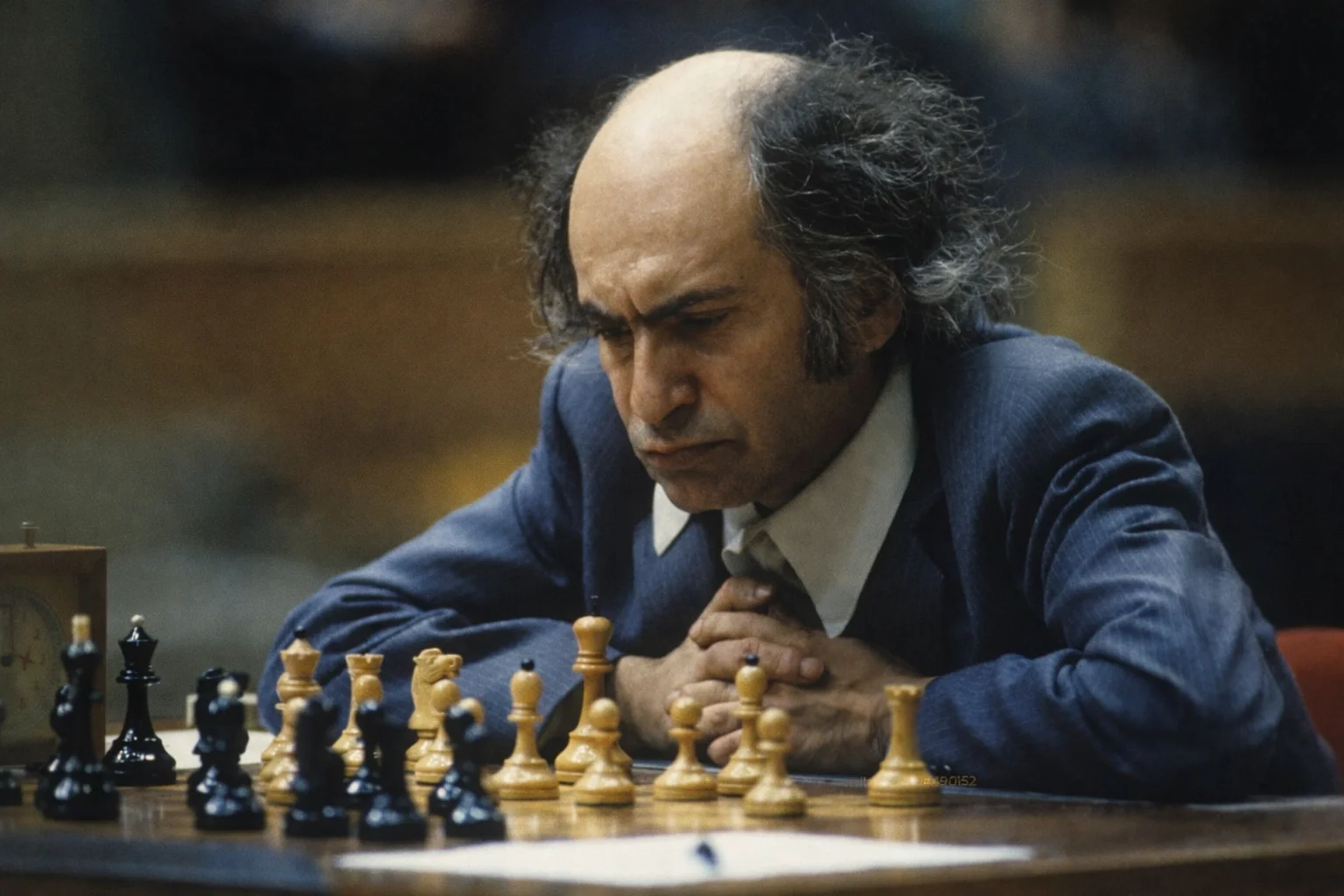
Mikhail Tal (Mihails Tāls)
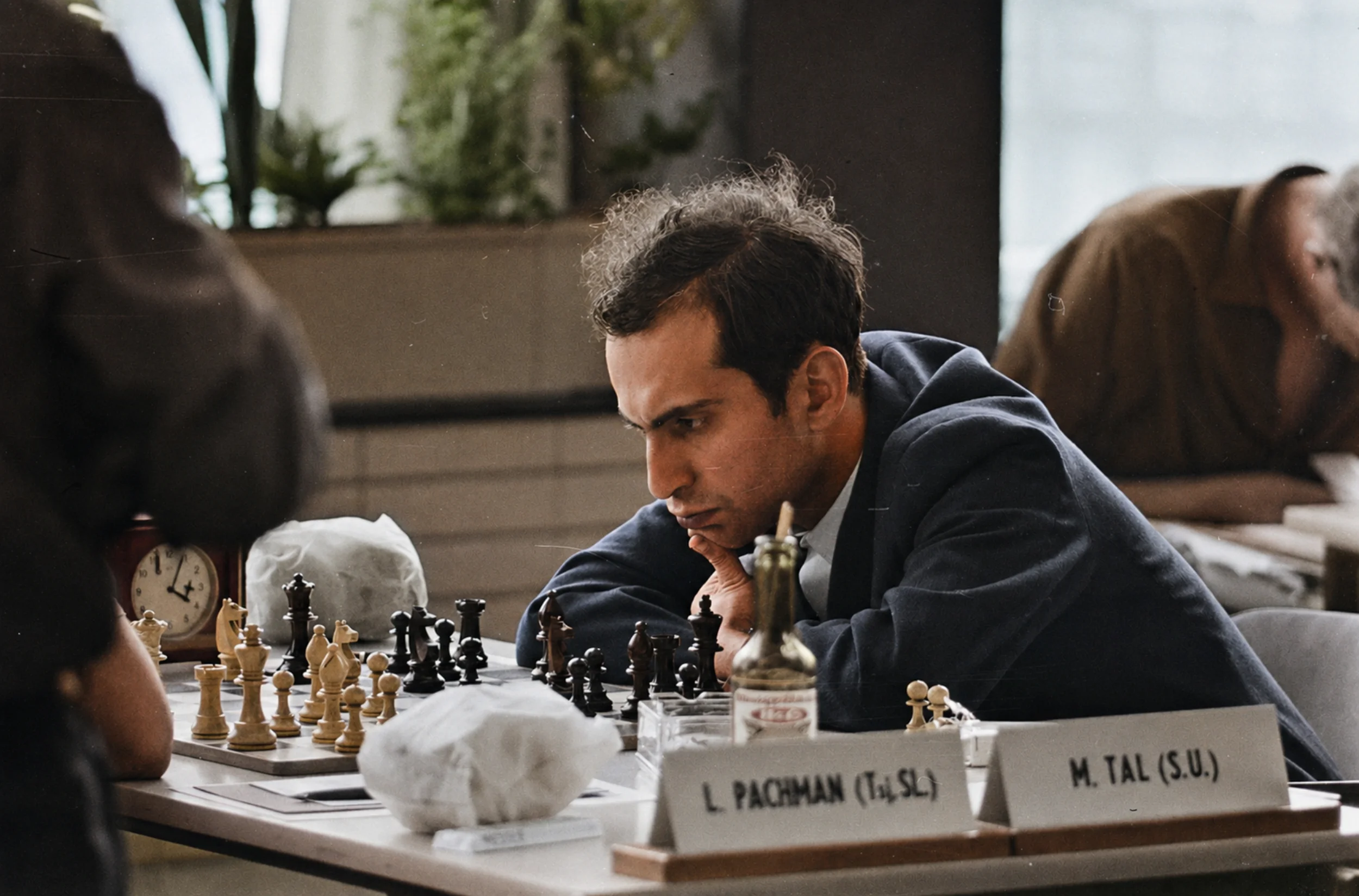
Mikhail Tal, Ludek Pachman, Amsterdam Interzonal, 1964
Mikhail Tal (1936–1992), the eighth World Chess Champion, was born in Riga, Latvia. He became internationally renowned after winning the 1960 World Championship at age 23, defeating Mikhail Botvinnik 12½–8½. Tal was also a six-time Soviet Champion and represented the USSR in eight Olympiads, all of which ended in team gold. His legendary status rests on both his extraordinary tactical imagination and his ability to integrate creativity with high-level competition.
Tal learned chess at six and quickly rose through local competitions. By sixteen, he was Latvian champion, and by 1957 he had achieved the international grandmaster title. His rapid ascent continued with victories in the 1958 Interzonal and the 1959 Candidates Tournament, proving that his meteoric reputation was earned within the rigorous championship cycle of Soviet chess.
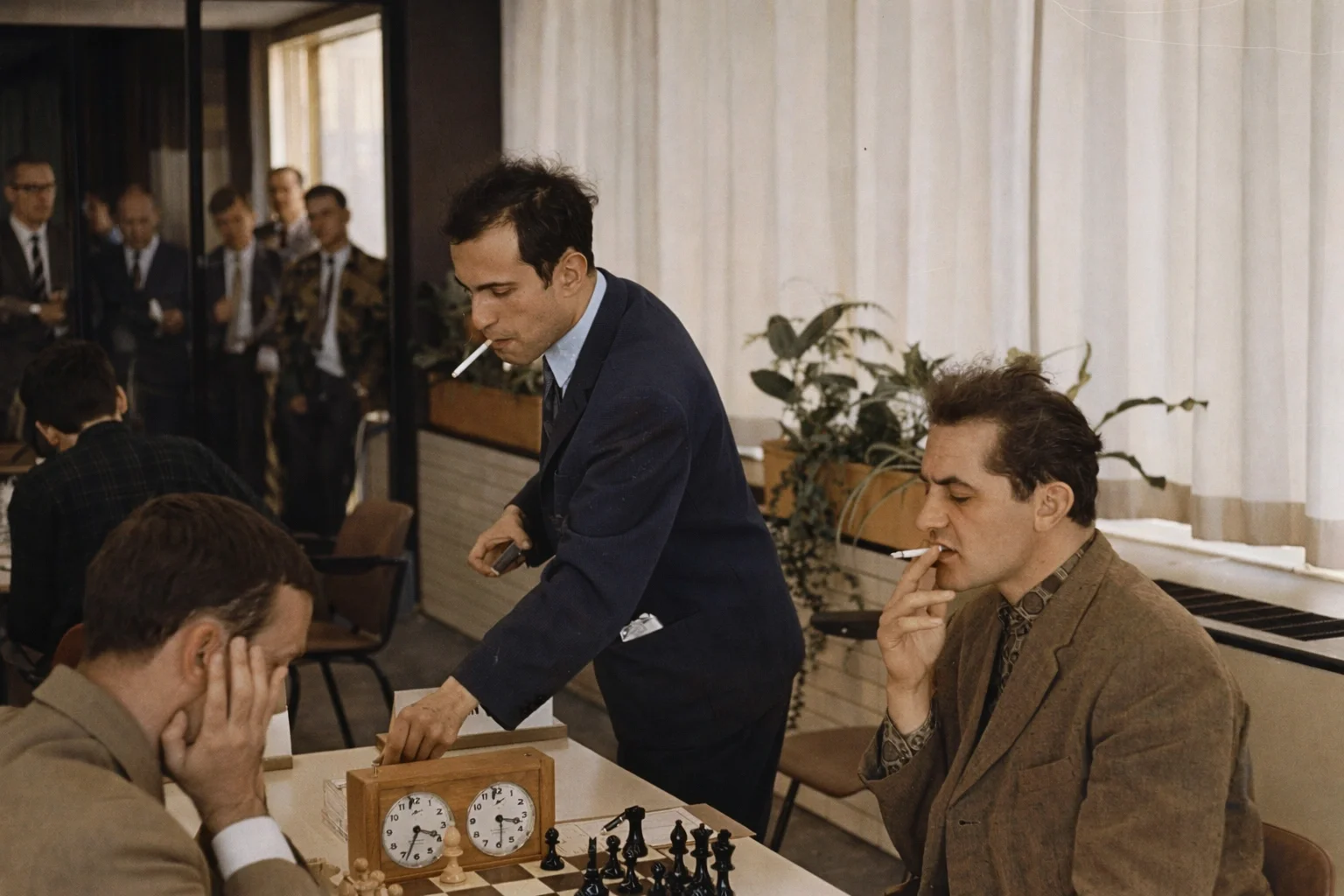
Mikhail Tal, Leonid Stein, Amsterdam Interzonal, 1964
The 1960 World Championship marked the pinnacle of Tal’s early career. Facing the methodical and deeply prepared Botvinnik, Tal’s combination-heavy style created positions of extreme complexity. Though Tal held the title for only a year, losing the 1961 rematch to Botvinnik, while battling kidney disease, his impact on chess was far greater than the brevity of his reign suggests.
Tal’s style, often described as “mad attacking,” was in reality a deeply considered application of practical pressure. He transformed uncertainty, initiative, and complexity into competitive weapons, demonstrating that positions could be strategically and tactically “unclear” yet still decisive. His approach reshaped the top level of chess thinking, showing that human factors such as nerves, time pressure, and intuition were crucial instruments in elite play.
Even in later years, Tal adapted his style. By the 1970s, he became more positional and methodical while retaining his tactical daring. This evolution illustrates that Tal’s genius was not static. He combined classical understanding with creative risk, making him a model of strategic adaptation under personal and physical challenges. His contributions to openings, particularly the Modern Benoni, reflect his ability to innovate within theoretical structures, turning risky positions into respected practical weapons.
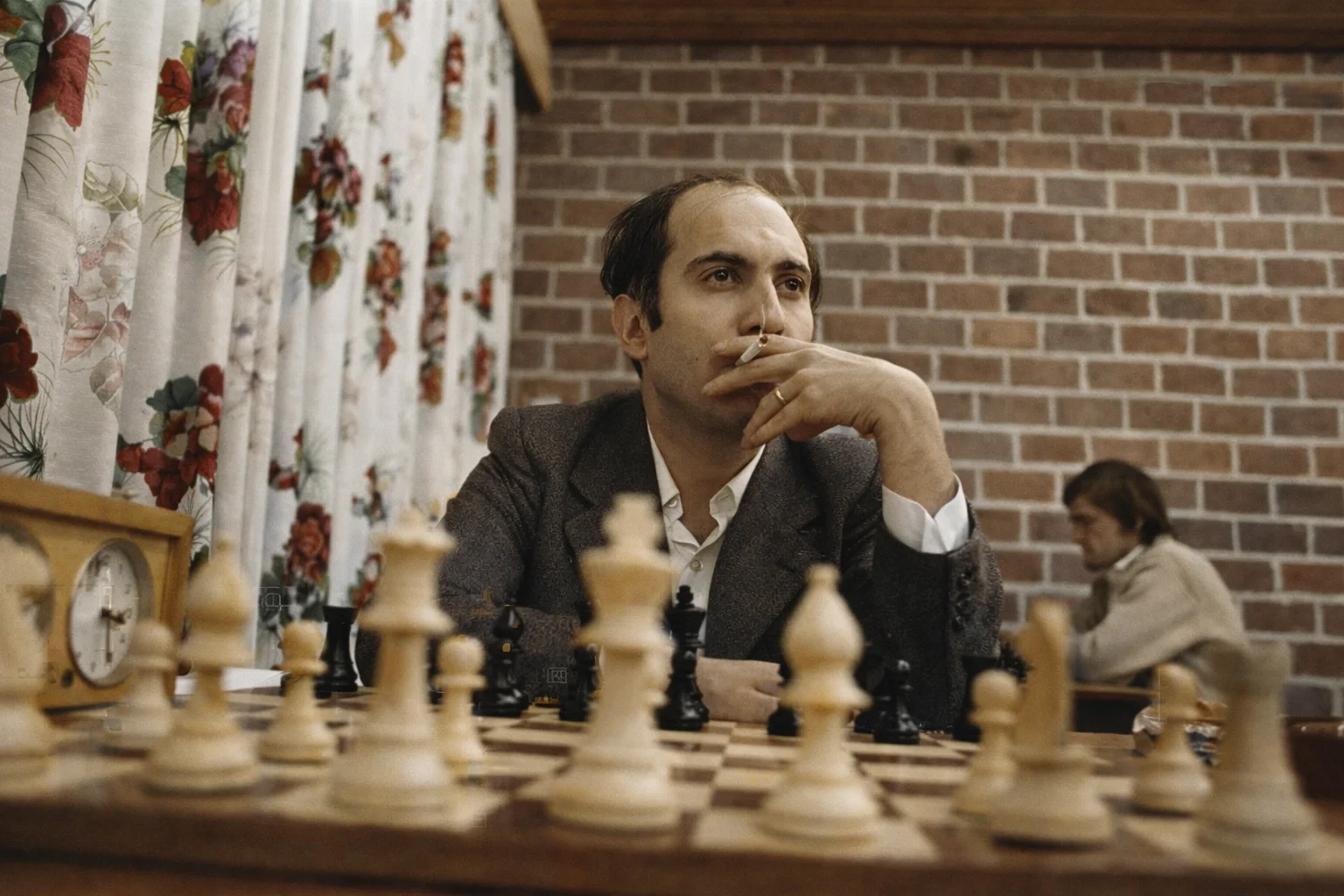
Wijk aan Zee, 1973
Beyond the board, Tal was a prolific writer and editor. He contributed to the Latvian chess magazine Šahs and authored works, including The Life and Games of Mikhail Tal and Tal-Botvinnik, 1960. Through these writings, he communicated the texture of chess life, blending humor, insight, and analysis. His literary contributions extended his influence, preserving both his personal style and the culture of Soviet chess for future generations.
Tal faced chronic health issues throughout his career, including kidney and liver ailments. Despite these challenges, he continued competing at the highest levels, achieving notable successes in the 1960s, 1970s, and 1980s. Among these was a 95-game unbeaten streak from 1973 to 1974 and his victory in the 1988 World Blitz Championship at age 51, demonstrating resilience and longevity rare among elite players.
Tal’s games remain celebrated for their imaginative combinations and bold sacrifices, exemplified in contests against Smyslov, Botvinnik, and others. His approach combined daring calculation with psychological insight, influencing generations of attacking players. He proved that human intuition, when harnessed with skill, could challenge even the most methodical opponents.
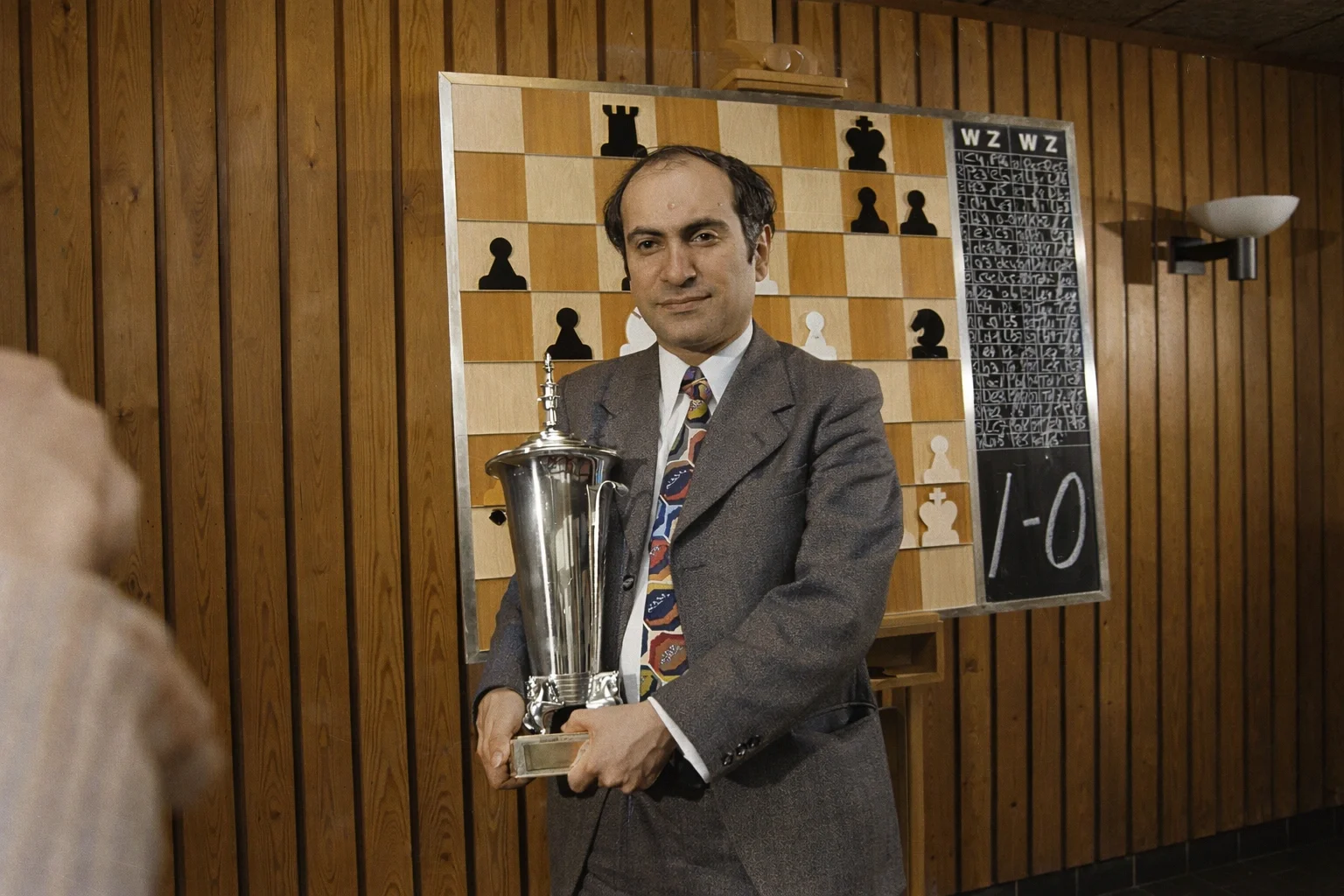
Mikhail Tal, Wijk aan Zee, 1973
Beyond competitive achievement, Tal’s personality added to his legend. He was widely admired for his humor, wit, and warmth, providing a counterpoint to the intensity of his games. This blend of brilliance, charm, and daring created a compelling public persona that has endured long after his passing.
Mikhail Tal’s enduring significance lies not only in his victories or brilliancies but in the way he expanded the definition of elite chess. He demonstrated that imagination, intuition, and creativity are as critical to competitive success as calculation and preparation. Tal’s legacy continues through his games, writings, and memorial tournaments, making him a permanent symbol of creativity and resilience in chess history.