Gregory Kaidanov: A Grandmaster at the End of the Soviet Age
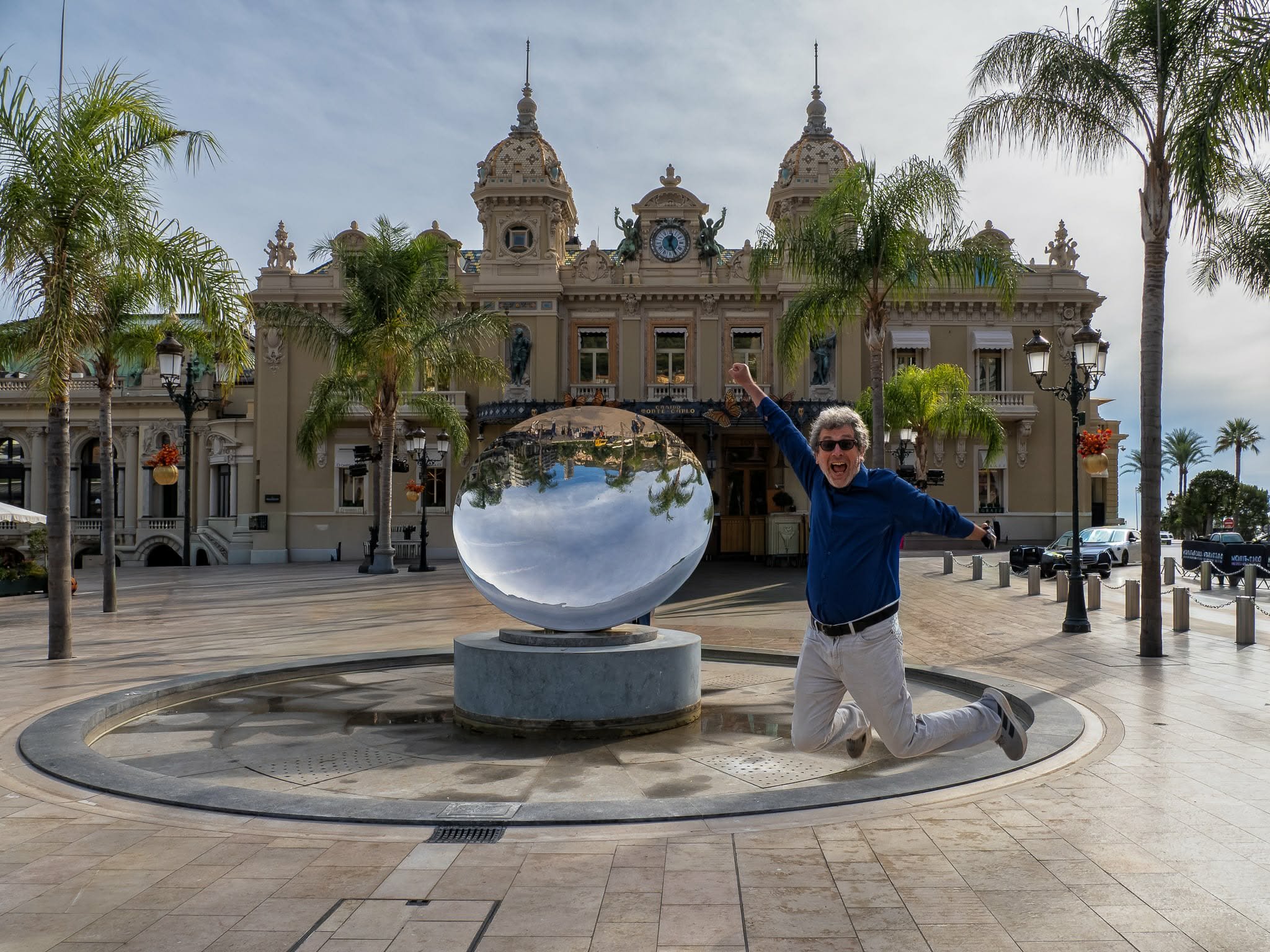
Photo courtesy of Anastasia Kaidanov
Grandmaster Gregory Kaidanov jumping in front of a fountain
Early Life and Soviet Chess Beginnings
Gregory Kaidanov (Григорий Зиновьевич Кайданов) was born on October 11, 1959, in Berdychiv, Ukraine (then USSR). His family moved in 1954 or so to Kaliningrad, a Russian city that had recently become part of the Soviet Union. It was in Kaliningrad that six year old “Grisha” learned chess from his father, sparking a lifelong passion. Kaidanov fell in love with the game even before he fully understood the rules, eagerly searching for opponents wherever he could find them. As a child, he would carry a chessboard to local parks, hoping for pick-up games, often losing to older kids until he began outplaying them.
By age eight, he joined the Pioneers’ House chess club, a modest but committed training group led by coach Ninel Grichenko. Contrary to the Western belief that chess was taught in every Soviet school, instruction was informal and club based. Kaidanov’s group had only a few dozen children and emphasized playing practice games rather than structured lessons. Still, the commitment was intense: (3) three-hour sessions per week. This steady, disciplined routine quickly propelled Kaidanov through the Soviet category ranks. He earned fourth category in his first year, third category the next, and continued progressing through the system.
His upward trajectory was not without heartbreak. Twice in his childhood, he missed category norms due to last round blunders. On the eve of his eleventh* birthday, he lost a winning position to a sudden checkmate after an impulsive queen move, a defeat that left him in tears. A year later, he spoiled a won pawn endgame while trying for first category and again vowed to quit chess forever. But each time, the passion returned. “Fortunately next day was Monday,” he later recalled, “and I was 15 minutes early, waiting for our coach to come and open the doors.” That resilience, disappointment followed by renewed devotion, became a defining feature of his chess life.
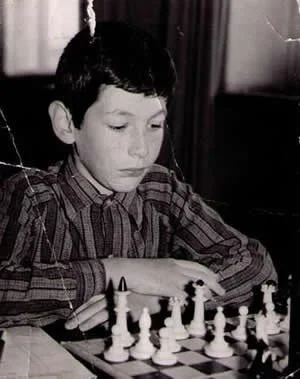
Borovichi, Russia, 1971
GM Kaidanov’s first tournament outside of his hometown.
Rise Through the Soviet System
By his mid teens, Kaidanov had become a fixture in the regional chess scene, a disciplined and methodical talent shaped by the rhythms of Soviet sports culture. Kaliningrad lacked the elite chess infrastructure of Moscow or Leningrad, but it hosted a vigorous tournament calendar. Kaidanov excelled, earning the Candidate Master title at 16 and qualifying for increasingly prestigious events.
His rise accelerated when he entered the nation’s brutal cycle of junior championships, where the country’s strongest teenagers competed for limited advancement opportunities. These tournaments were demanding, long journeys, basic conditions, and boards filled with prodigies, but Kaidanov adapted with quiet determination.
It was during these formative years that he absorbed one of the central pillars of Soviet training philosophy, later expressed in his contribution to Mark Dvoretsky and Artur Yusupov’s Training for the Tournament Player. Reflecting on the mastery required of serious competitors, Kaidanov wrote:
“The arsenal of any strong chess player includes an enormous number of the most varied methods and evaluations, ranging from the generally familiar to the non-standard. It is very important to be able to identify in material being studied something general, something capable of enriching your game. Even grandmasters and masters occasionally come across ideas with which they were previously unfamiliar.”
This philosophy of disciplined study, openness to new ideas, and continual refinement mirrored the habits he built as a young competitor.
By the early 1980s, Kaidanov had earned the title of Master of Sport and competed regularly in major all-union tournaments. The Soviet system made the leap from Master to International Master arduous, but Kaidanov’s steady results and strategic maturity earned him the IM title in 1987. In 1988, he completed his grandmaster norms, becoming one of the last players to achieve the GM title under the Soviet Union.
Leaving the USSR and the Path to a New Chess Life
When the Soviet Union collapsed in 1991, professional chess in the region entered economic freefall. State support disappeared, stipends evaporated, and many titled players suddenly faced uncertain futures. Kaidanov reoriented his life, emigrating to the United States with minimal resources but absolute faith that chess could remain his vocation.
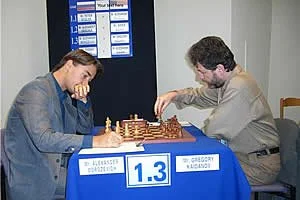
He quickly established himself as one of the strongest and most respected competitors in the country. His victories included the U.S. Open, World Open, National Open, and appearances for the United States in multiple Olympiads. His playing strength, steady demeanor, and sportsmanship earned admiration across the American chess landscape. (I’m not risking early onset carpal tunnel syndrome by listing all of his achievements. Search him up!)
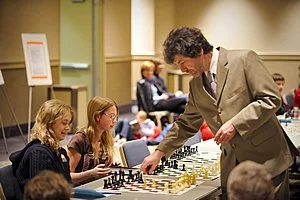
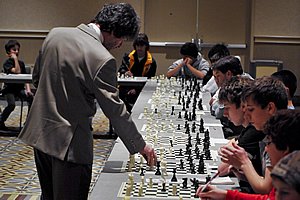
Yet his most enduring influence emerged through teaching. Based in Lexington, Kentucky, Kaidanov became one of the nation’s premier instructors, shaping generations of players with a training style that blended Soviet discipline with American accessibility. Students consistently praise his clarity, patience, and ability to make complex ideas manageable. Many credit him not only with elevating their understanding of chess but also with changing how they approached learning itself.
Today, GM Kaidanov stands as a bridge between two chess worlds: the rigor of the late Soviet system and the openness of American chess culture. His story is one of persistence, humility, and an enduring devotion to the game that first captivated him as a six year old in Kaliningrad.
Notes
Gregory Kaidanov, “My Story,” Kaidanov.org.
“Coach of the Month: GM Gregory Kaidanov,” Chess.com.
“GM Gregory Kaidanov,” United States Chess Federation biography.
Anastasia Kaidanov, confirmation of Russian spelling of his full name.
“Gregory Kaidanov,” World Chess Hall of Fame.
“Gregory Kaidanov,” English Wikipedia.
Perpetual Chess Podcast interview with Gregory Kaidanov.
Chess.com Player Database: “Top Players – Gregory Kaidanov.”
Gregory Kaidanov, “A Feel for the King,” in Dvoretsky & Yusupov, Training for the Tournament Player, 154.
Casual Turabianist. It’s Pop History. Chill. Most important thing below
