Fedir Bohatyrchuk: The Champion who Vanished from the Canon
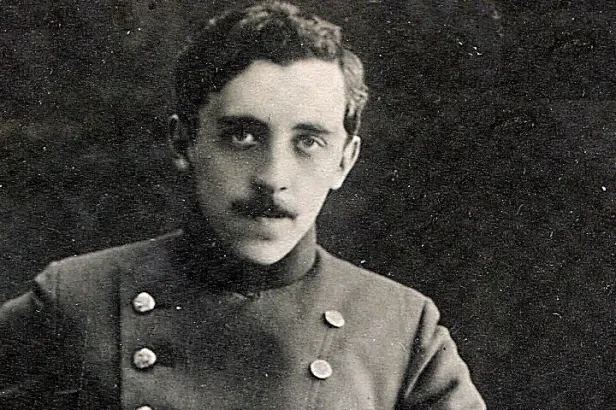
Федір Бохатирчук
In October 1927, under the chandeliers of the Hall of Columns, a 34‑year‑old Kyiv radiologist split first at the USSR Championship with Peter Romanovsky. A debuting 16‑year‑old named Mikhail Botvinnik finished in the chasing pack. The co‑champion was Fedir Bohatyrchuk, whose score (+10 −1 =9) put him on the first line of Soviet chess history. Yet within a generation, his name was thinned out of the narrative, then trimmed almost to nothing. What happened to the man who stood on top of the Soviet championship podium in the same breath that “Botvinnik” first entered the program?
A prodigy, a war’s interruption, a methodical style
Born in Kiev in 1892, Bohatyrchuk won his city championship as a teenager and studied medicine at the University of St. Volodymyr. He played well in Mannheim 1914’s secondary event before the war stopped the tournament and upended the lives of dozens of masters. The outlines of that early career come through most cleanly in the Russian‑language profiles prepared by the Russian Chess Federation and in Voronkov’s research, whose biographical chapters stitch together tournament reports with letters and documents. The picture that emerges is not of a fireworks player but of a stubborn, practical positionalist whose games read like a radiologist’s report: evidence‑first, clinical, unforgiving. Федерация шахмат России
Moscow 1927: a co‑title and a fork in the timeline
The fifth USSR Championship, held 26 September to 25 October 1927 in Moscow, ended with two names on the top line: Bohatyrchuk and Romanovsky. The crosstable is not controversial; what history did with it is. Many later surveys turned this triumph into a footnote, even as the same event is remembered, rightly, for the debut of a future world champion. Re‑printing that table here is less important than restoring what it signified: at the precise moment the Soviet school took shape, Bohatyrchuk was not an outlier. He was the standard. OlimpBase+1
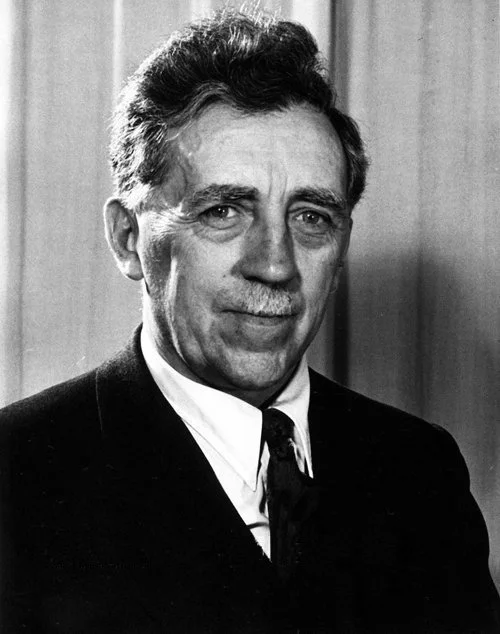
Федір Бохатирчук
The Botvinnik Problem
There is a stark statistic you will almost never meet in Soviet‑era books: Bohatyrchuk’s lifetime head‑to‑head against Botvinnik is +3 =2 −0. Contemporary Russian reporting now states this plainly, adding the coda that their 1935 encounter in Moscow again went to the Kyiv doctor. Because the figure has sometimes been under‑reported in Western summaries, I cite the Russian Federation’s biographical note directly. Whatever gloss posterity tried to apply, over the board the score remained stubbornly the same. Федерация шахмат России
The 1935 Moscow International is where the theme crystallizes. Botvinnik shared first with Flohr; Lasker, at 67, was still undefeated; Capablanca prowled as only Capablanca could. In the middle of that tableau, Bohatyrchuk defeated the Soviet standard‑bearer again. Tournament summaries and databases agree on the result; an English‑language event digest even uses the word “nemesis.” The moves are public domain and can be replayed easily; what matters here is the texture: Bohatyrchuk dulls counterplay, clamps the light squares, and never lets the position breathe. It is a technique without fanfare, and it cuts. chesscafe.com
Fall from Favor
After 1935, the press turned. The RCF profile quotes a private admonition: that he had the poor judgment to win a game which, for Soviet prestige, “ought” to have gone the other way. The summary says plainly that a campaign followed, including accusations about club finances in Kyiv. Even if we stand well back from any one anecdote, the observable pattern in the printed record is clear enough: invitations slowed; the man who had just split third–fourth in the 1934/35 USSR Championship found his chess oxygen thin. He worked and published as a physician instead. Федерация шахмат России
War, Prague, and Exile
Bohatyrchuk’s wartime path is inseparable from the politics of occupation. In Kyiv he chaired a medical association and, according to accounts collated by Voronkov, tried to mitigate POW conditions; in 1944 he moved to Prague and joined the Committee for the Liberation of the Peoples of Russia (KONR). The Prague Manifesto of 14 November 1944 is primary, survives in Russian and English, and is now well‑cataloged both at Russia’s federal archives portal and in scholarly overviews. Cite the text, name the affiliation, and resist euphemism: this is the point at which the Soviet historiography would later render his name unprintable. History Russia
Canada, the Letters, and a Belated IM
Postwar, Bohatyrchuk reached the American zone, then emigrated to Canada. At the University of Ottawa, he taught radiological anatomy; Library and Archives Canada holds his personal papers and family fonds, including correspondence, manuscripts, clippings, and photographs. On the board, he represented Canada at the 1954 Amsterdam Olympiad and, in 1954, received the title of International Master. The CHESS magazine exchanges in 1949–50 then erupted: Luděk Pachman on one side, Bohatyrchuk on the other; a flurry of accusations and counter‑accusations; and a remarkable window into how East–West narratives were already hardening. Edward Winter’s dossier is the safest English‑language guide to those letters, with meticulous citation to the magazine page.
