Evgeni Vasiukov: The Self-Made Grandmaster Who Shaped Soviet Chess
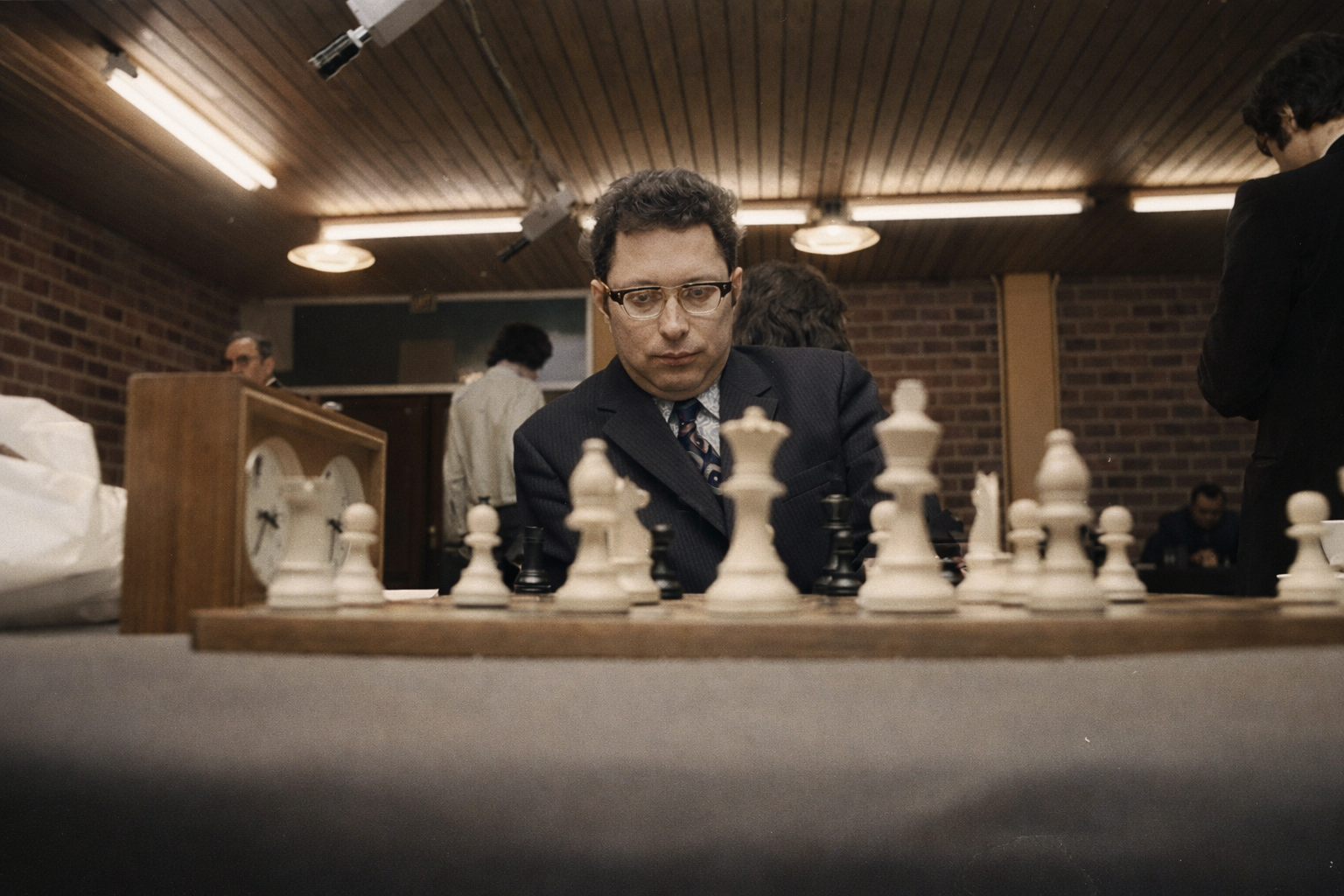
Evgeni Vasiukov, Wijk aan Zee, 1973
Evgeni Andreyevich Vasiukov was born in Moscow on 5 March 1933. His early life was shaped by war: he was evacuated as a child, and his father was killed in World War II. One of the most striking facts about him is that he learned chess only at age fifteen, which makes his later rise especially remarkable. He was not a polished prodigy produced by a formal pipeline. He was, instead, largely self-made, developing through persistence, competition, and unusual natural talent.
Vasiukov emerged quickly in one of the most difficult chess environments ever assembled: postwar Moscow and the Soviet Union. He won the Moscow Championship six times, beginning in 1955, and that achievement alone marked him as a player of exceptional class. He also excelled in World Student Team Championships, earned the International Master title in 1958, and became a Grandmaster in 1961. Among his strongest tournament results were his victory at Belgrade in 1961 and his outstanding first place in Manila in 1974, where he finished ahead of several world-famous grandmasters. Although he never became a world championship contender in the formal cycle, this reflected the ferocious depth of Soviet chess as much as any personal limitation.
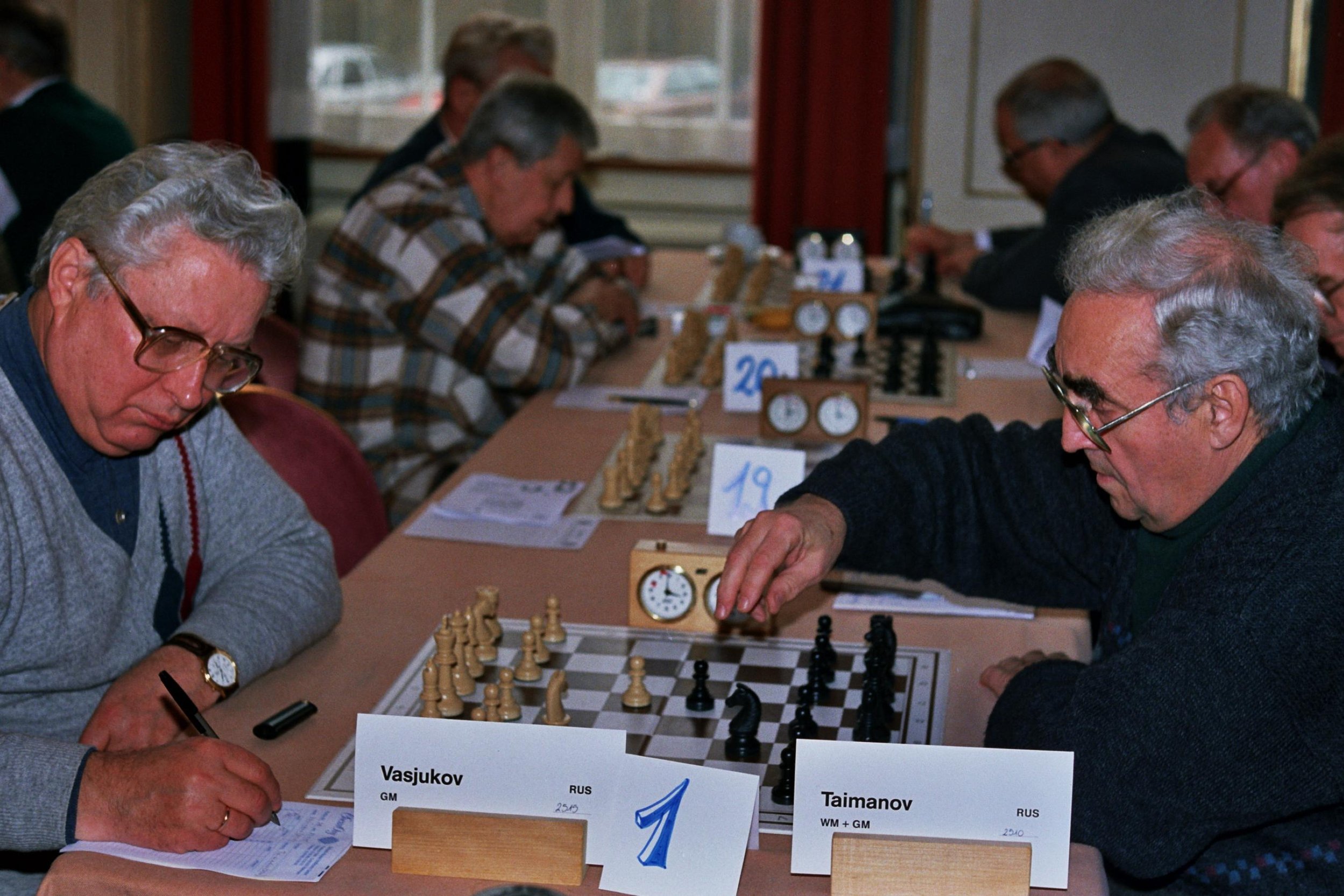
Evgeni Vasiukov and Mark Taimanov
Vasiukov was known for sharp, inventive, attacking chess. In his younger years he was often compared, in spirit at least, to Mikhail Tal because of his tactical imagination and willingness to play dynamically. Later, his style matured into something more strategic and controlled, but he retained a taste for originality and uncomfortable positions. He was also an important theoretician. He contributed opening ideas that circulated within elite Soviet preparation, including analysis connected with the Pirc or Ufimtsev Defense, and he helped study opponents such as Bobby Fischer. His legacy in chess theory is less tied to a single branded variation than to a broader reputation for fresh and practical opening ideas.
A large part of Vasiukov’s importance lies in work that happened behind the curtain. He served as a trainer, second, analyst, and consultant for major Soviet players and teams, and was associated with figures such as Karpov, Korchnoi, Tal, Geller, and others. In world championship contexts, his role went beyond openings: he helped with preparation, morale, and match strategy. He also became a significant writer and commentator, producing books, articles, and newspaper columns while explaining elite chess to a wider public. In this sense, he was not merely a competitor but one of the intellectual workers who helped sustain chess culture.
Vasiukov remained active deep into old age. He won the World Senior Championship in 1995 and continued playing strong chess for decades afterward. Just as important, he became a major organizer of veterans’ chess in Russia, helping transform it into a serious and lively competitive sphere rather than a ceremonial afterthought. His historical importance rests on this full spectrum of activity: elite player, original analyst, trusted second, public commentator, and builder of institutions. He may not be as famous as the Soviet world champions, but he stands as one of the clearest examples of how deep, rich, and collectively sustained Soviet chess culture really was.
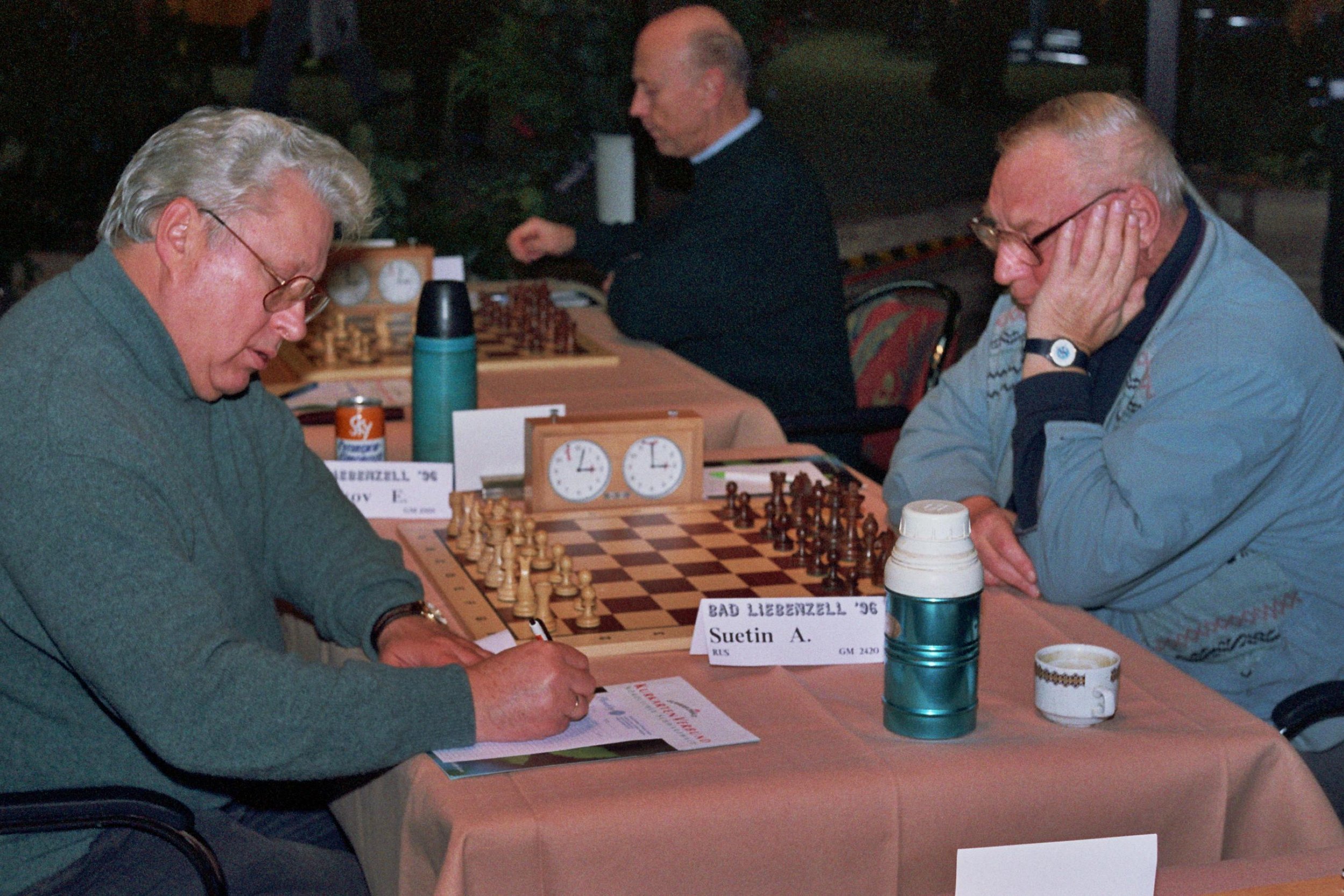
Evgeni Vasiukov and Alexey Suetin
