Vladimir Makoganov: Soviet Chess Master, Opening Theorist, and Coach to Kasparov
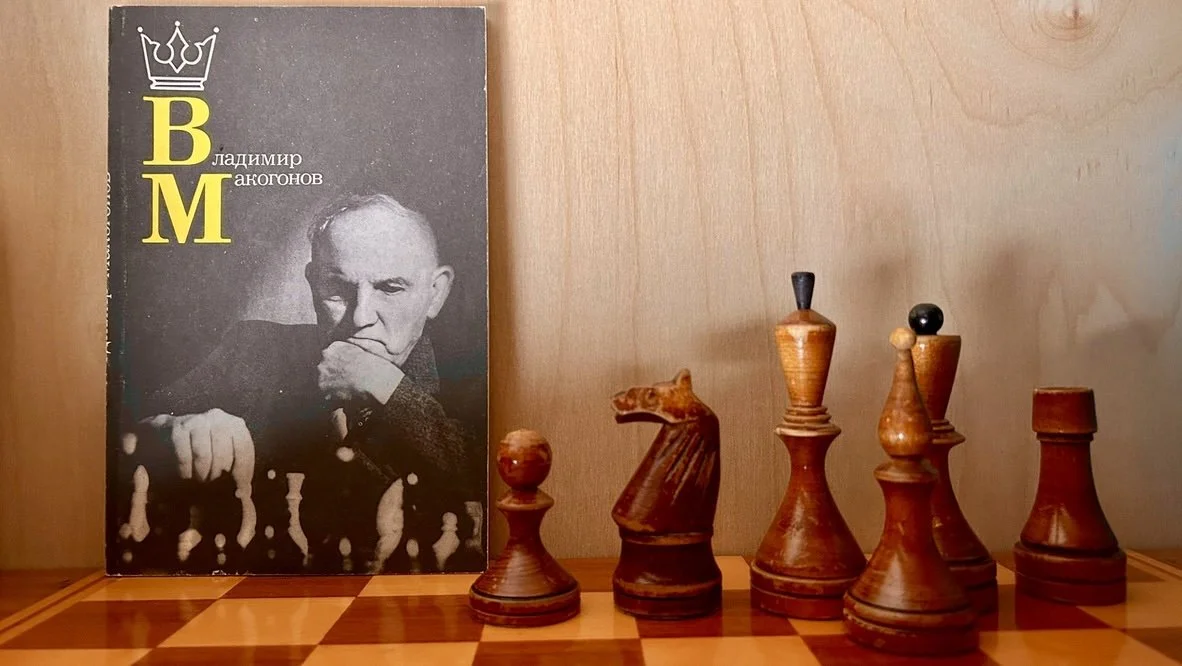
Vladimir Andreevich Makogonov belongs to that rare class of historical figures who matter at several levels at once. He was a world-class player in the 1940s, a major opening theoretician, a formative coach in the Soviet tradition, and a central pillar of Baku and Azerbaijani chess culture, yet he never became as internationally famous as some of the players he regularly outplayed. That combination, elite strength plus muted fame, is exactly what makes him historically interesting. He is less a marginal footnote than a load-bearing beam in the architecture of Soviet chess.
Life, setting, and the Baku world that made him
Makogonov was born on August 27, 1904, in Nakhchivan, then in the Erivan Governorate of the Russian Empire, and he died on January 2, 1993, in Baku, the city with which his life and legacy are most closely associated. Soviet and Russian biographical records note that he became a USSR Master in 1927, an International Master in 1950 when FIDE introduced the title, an Honored Master of Sports of the USSR in 1943, and an honorary Grandmaster in 1987 for his earlier achievements. He spent most of his life in Baku, and that matters because his career is inseparable from the growth of organized chess in Azerbaijan.
The Baku connection is not decorative background, it is the soil from which Makogonov’s importance grows. Organized chess in Soviet Azerbaijan took shape rapidly after 1920, and the first Baku championship, in 1923, was won jointly by Vladimir and his older brother Mikhail Makogonov. Later sources also describe Vladimir not merely as a chess professional but as a mathematics teacher by training, and one federation profile notes a friendship with the physicist Lev Landau. Even at this early stage, then, Makogonov appears as more than a tournament player: he belonged to a Baku intelligentsia in which chess, pedagogy, and scientific culture overlapped.
Rise through the Soviet chess system
His early ascent was sharp. In the 1927 USSR Championship, Makogonov shared 5th to 6th place with the young Mikhail Botvinnik, a result that earned him the Soviet master title and announced him as a serious force. Russian federation profiles add an important detail that helps explain the shape of his career: after that breakthrough he stepped away from chess for several years, then returned in the mid-1930s and rapidly re-established himself among the country’s best. Across the period 1927 to 1947 he played in eight USSR Championship finals, won Transcaucasian titles in 1928 and 1948, and became a many-time champion of Baku. His trajectory was therefore not a single uninterrupted climb, but a return story, which makes his later peak all the more impressive.
By the later 1930s Makogonov was not merely a strong master, he was part of the Soviet elite. He finished 4th in the 1937 USSR Championship, tied 4th to 5th in the 1939 championship, and scored one of his finest prewar results in the powerful Leningrad-Moscow event of 1939, where he shared 3rd to 6th and defeated both Samuel Reshevsky and Paul Keres. Russian chess writers of the time called him a scourge of mighty champions, which sounds theatrical until one looks at the crosstables. It was not empty rhetoric.
The 1940 USSR Championship sharpened that reputation further. Makogonov did not win the event, but he defeated three future or near-future giants in the same tournament, Botvinnik, Keres, and Smyslov. That is one of the most revealing facts about his practical strength. He was not simply a careful positional player collecting draws; at his best he could beat the hardest company in Soviet chess, and Soviet chess in 1940 was about as fierce as any national circuit in history.
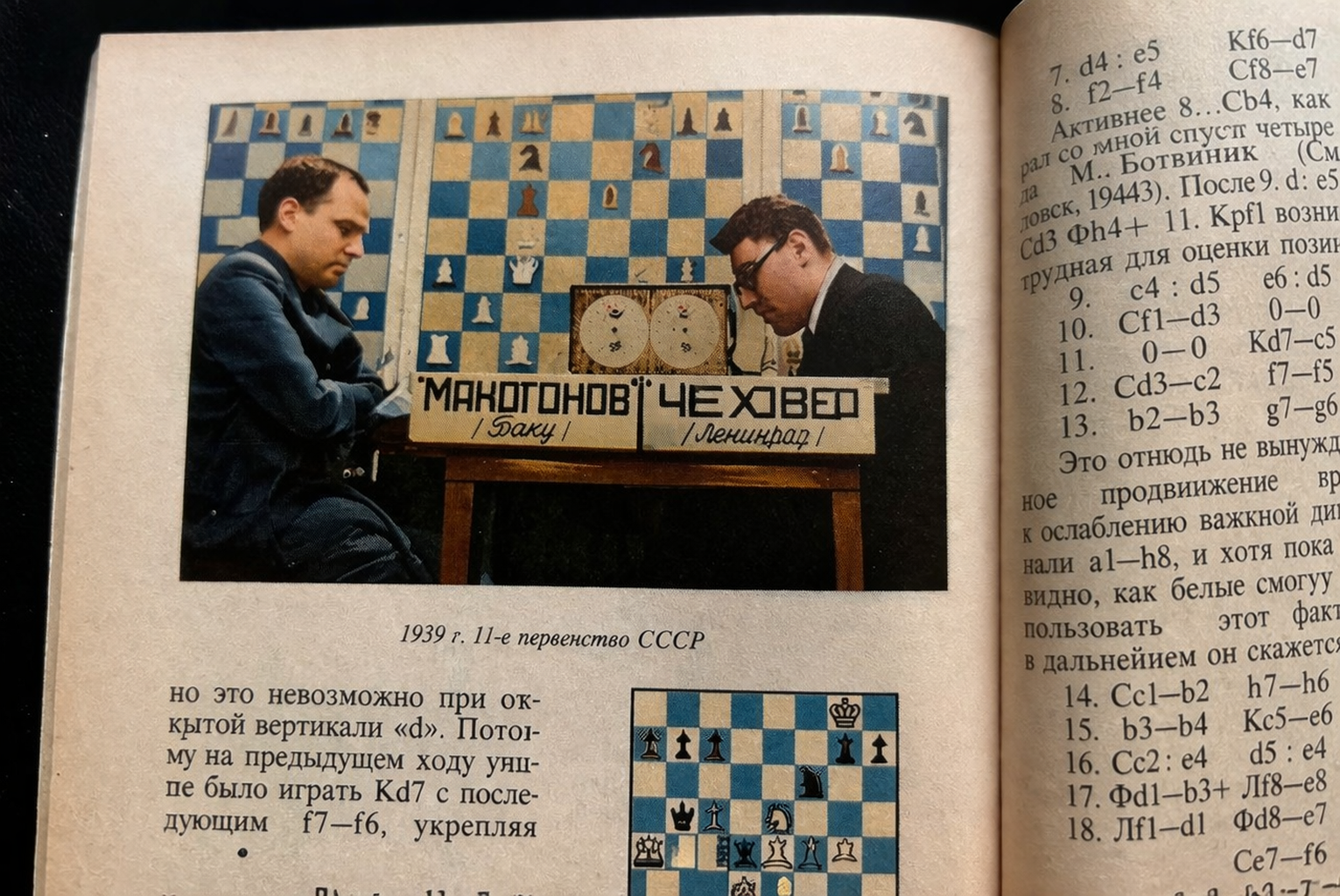
1939 г. 11-е первенство СССР
Peak years, wartime strength, and retrospective world standing
His wartime and immediate postwar years form the core of his claim to world-class status. In 1942 he finished ahead of Salo Flohr in a Baku match, although source traditions differ on the exact bookkeeping: some record a completed 12-game victory by 7.5 to 4.5, while Azerbaijani historical summaries describe the match as abandoned after 10 games with Makogonov leading 5.5 to 4.5. What is not in doubt is the main point, Makogonov had the better of Flohr in Baku. In 1943 he then took 2nd at Sverdlovsk behind Botvinnik, finishing ahead of Smyslov and Boleslavsky; the tournament table shows just how strong that result was. In the 1945 USSR-US radio match he scored 1.5 out of 2 against Abraham Kupchik on board 9. Retrospective Chessmetrics calculations place his peak historical rating at 2735 in October 1945 and his highest world rank at no. 5 in July 1945, which should be read not as official Elo, but as a serious estimate of just how strong he was at his best.
The Sverdlovsk result deserves a little extra emphasis because it captures Makogonov in his mature form. The table shows him on 9/14, second only to Botvinnik’s 10.5, and the game list shows wins against Smyslov, Kan, Boleslavsky, and Ragozin. This was not a soft second place assembled from cautious half-points. It was a high-end performance in a compact field of Soviet heavyweights. When historians say Makogonov was one of the strongest players in the world in the 1940s, Sverdlovsk is one of the clearest pieces of evidence.
Regional dominance and Azerbaijani stature
Makogonov’s role in Azerbaijani chess was not symbolic; it was sovereign. He won the Azerbaijan championship five times in the span from 1947 to 1952, with 1950 the lone interruption, and Russian-language records describe him as a many-time champion of Baku as well. One remarkable surviving crosstable for the 1947 Azerbaijan championship shows him scoring a perfect 15/15, a result so clean it looks almost fictional until you see the table itself. Regional titles can vanish in the shadow of USSR finals, but in Makogonov’s case they are essential: they show him as the dominant local authority in the chess culture that later produced Bagirov, Zatulovskaya, and Kasparov.
Style, strengths, and the logic of his games
Botvinnik’s assessment is one of the most illuminating windows into Makogonov’s chess. He described him as an outstanding master whose style was close to Akiba Rubinstein’s, producing deep and positionally rich games, while also acknowledging his tactical inventiveness. That pairing matters. Makogonov is easy to label a “positional player,” but that can sound flatter than the reality. His chess was classical rather than dry: careful structure, clear piece coordination, strong prophylactic instincts, and then, when the position ripened, accurate tactical harvest. Botvinnik did add a criticism, namely that Makogonov’s style could be one-sided, and that this limited how far he ultimately rose. Even that criticism is revealing, because it suggests not insufficiency of strength, but a very strong identity.
One of the pedagogical ideas attached to his name in former Soviet chess culture is the rule that, when no direct attacking plan presents itself, a player should identify the worst-placed piece and improve it. Historians note that the idea itself is older than Makogonov, reaching back into the nineteenth century, but the association is still meaningful. It captures the essence of his method: patient improvement, better placement, less noise, more pressure. In other words, he became a mnemonic for a classical strategic habit.
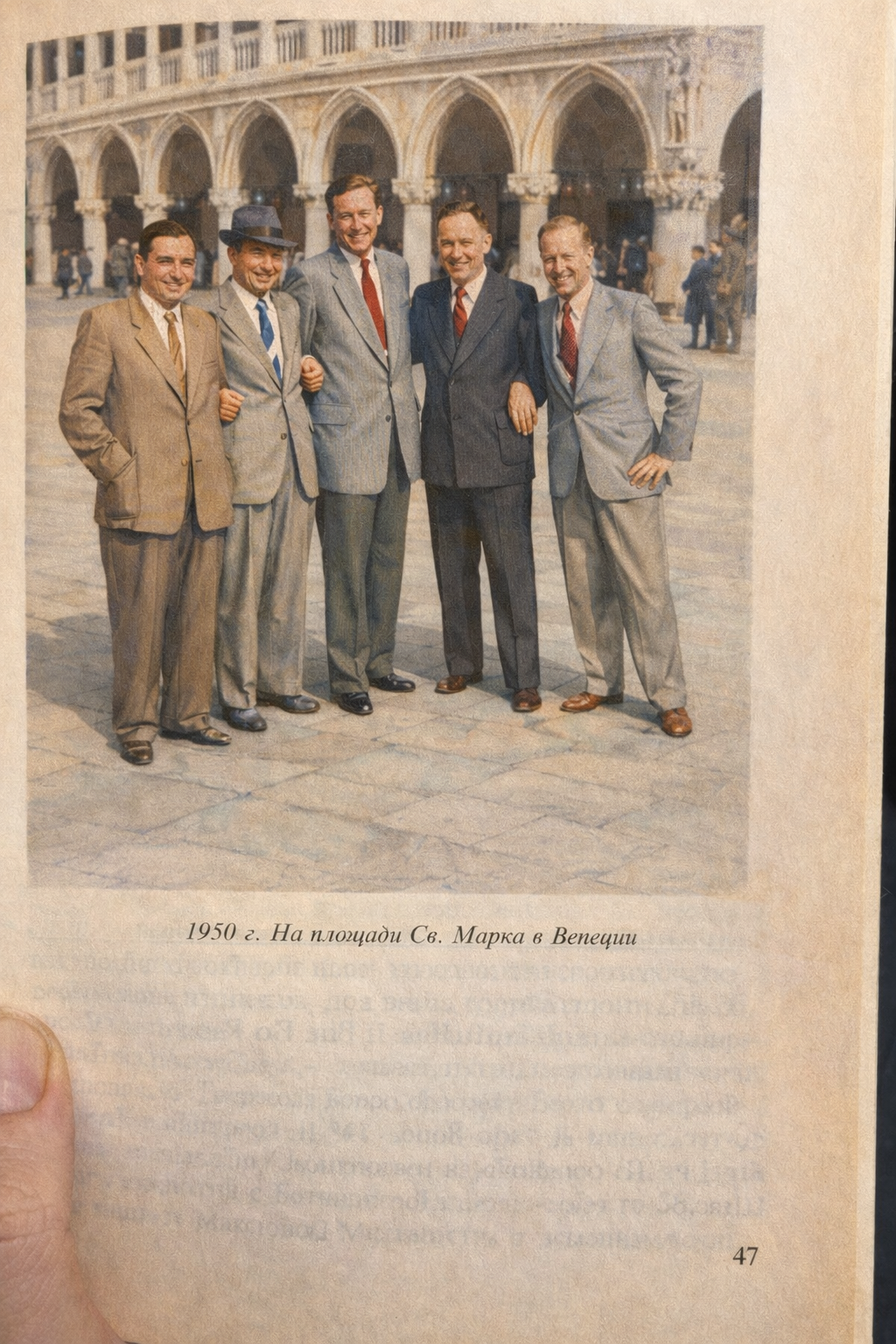
1950 г. На площади Св. Марка в Вепеции
Vladimir Makogonov in Venice, Italy
Opening theory, where his name still lives on the board
Makogonov’s contributions to opening theory are substantial enough that reducing him to “the man with a variation named after him” actually understates the case. Russian biographical sources credit him with serious work not only in the lines that now carry his surname, but also in Rubinstein systems in the Semi-Meran of the Slav and in the Four Knights. Russian federation profiles further credit him with durable ideas in the Caro-Kann. He was, in short, a system-builder, someone who helped turn loose practical ideas into stable theoretical frameworks.
His most famous contribution in the Queen’s Gambit Declined is the Tartakower-Makogonov-Bondarevsky system, typically reached by 1.d4 d5 2.c4 e6 3.Nc3 Nf6 4.Bg5 Be7 5.e3 0-0 6.Nf3 h6 7.Bh4 b6. Russian opening histories are explicit that Tartakower introduced the underlying system earlier, but that Makogonov’s and Bondarevsky’s analysis and practical adoption helped transform it into one of Black’s principal answers to the Queen’s Gambit. The naming history itself is revealing: outside the Soviet sphere it was often called simply the Tartakower System, while Russian literature insisted more clearly on Makogonov’s and Bondarevsky’s role. That is a small example of a broader pattern in chess memory, where analysis done inside Soviet practice did not always receive equal billing outside it.
In the King’s Indian Defence, the Makogonov Variation begins with the early h3 setup, classically 1.d4 Nf6 2.c4 g6 3.Nc3 Bg7 4.e4 d6 5.h3. Russian sources say Makogonov developed the system with Alexey Sokolsky from an earlier Réti idea. Its logic is wonderfully Makogonovian: h3 supports Be3 by stopping ...Ng4, and it can prepare g4 while still keeping the f3 square free for a knight. Later top players from Bronstein to Gligorić, Portisch, Uhlmann, Larsen, and Kavalek used versions of it, and Bagirov helped extend the line further. This is not a historical curiosity pinned in a museum drawer; it is a strategic concept that stayed alive for decades.
In the Grünfeld Defence, Makogonov’s name is attached to the closed system with 6.b4 after 1.d4 Nf6 2.c4 g6 3.Nc3 d5 4.Nf3 Bg7 5.e3 0-0. Russian theory sources explain the point cleanly: b4 restrains Black’s ...c5 break and prepares queenside space expansion. They date Makogonov’s first practical uses of the line to 1951, against Novotelnov and Boleslavsky, and note that it was later taken up particularly by Taimanov and Bagirov. Here again one sees a familiar pattern in his chess mind, prophylaxis first, then spatial claim, then pressure.
Coach, teacher, and transmitter of Soviet method
Makogonov’s second great life in chess was pedagogical. He assisted Vasily Smyslov in preparation for the 1957 world championship match against Botvinnik, the match Smyslov won. He trained Vladimir Bagirov and Genrikh Chepukaitis, and, crucially, on Botvinnik’s recommendation he became one of Garry Kasparov’s earliest teachers. Kasparov’s own biographical record states that at age ten he trained at Botvinnik’s school under Makogonov, who helped develop the young prodigy’s positional skills and taught him the Caro-Kann and the Tartakower system in the Queen’s Gambit Declined. That coaching line, Makogonov to Kasparov, is not a charming side note. It is one of the direct conduits by which classical Soviet positional method flowed into the greatest player of the late twentieth century.
Another valuable window into Makogonov the trainer comes from Tatyana Zatulovskaya, who later called him one of the country’s best coaches. Her recollection is strikingly concrete: he taught her middlegame judgment, especially what to exchange and what to preserve, insisted that health and physical exercise mattered for chess performance, and remained in memory as a gentle, kind person. This testimony adds something tournament records cannot. It shows that Makogonov’s influence was not merely technical but methodological and humane. He trained players to think, to choose, and to endure.
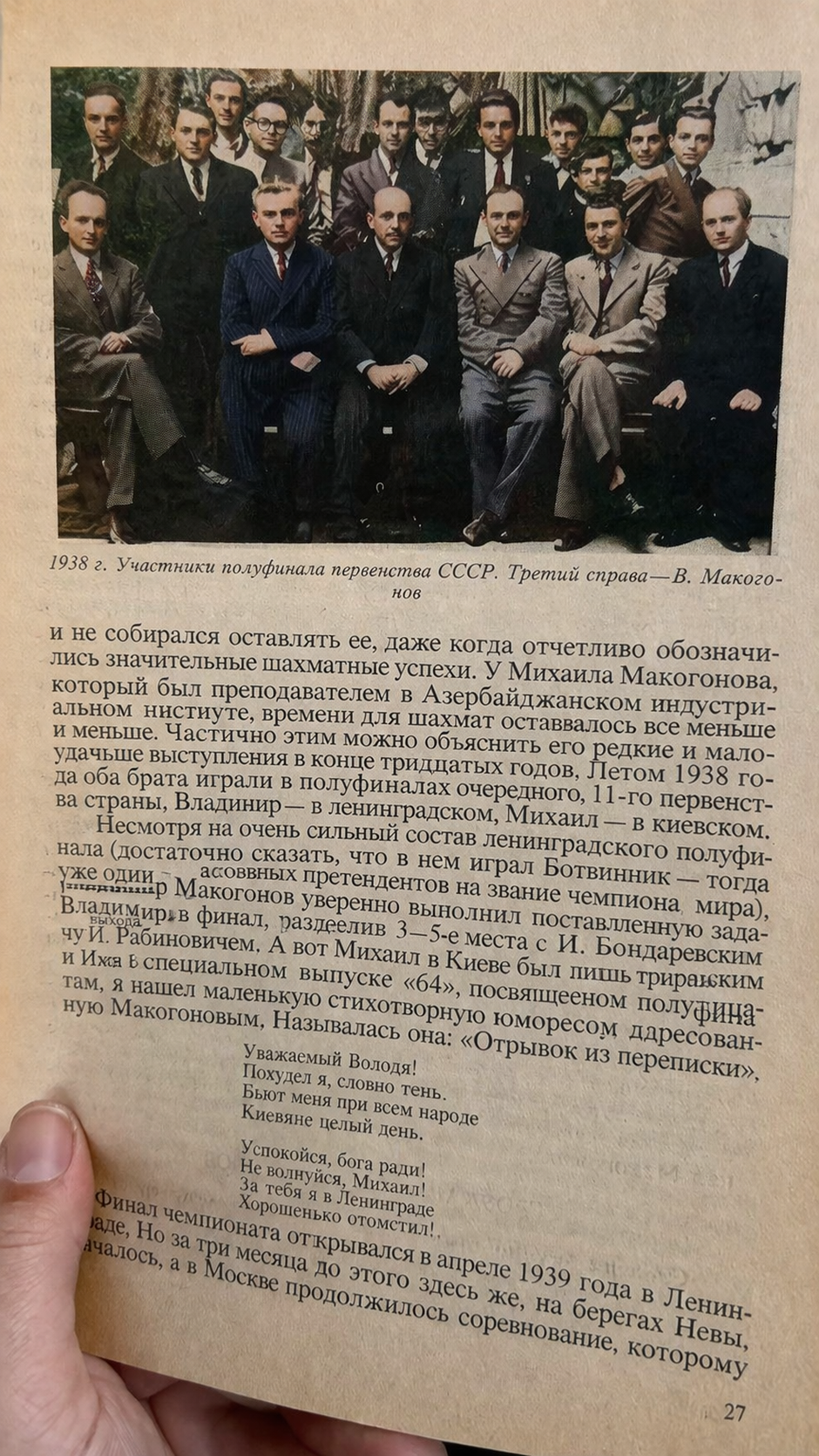
1938 г. Участники полуфинала первенства СССР. Третий справа— В. Макогонов
Baku, institution-building, and the long shadow of his local influence
Azerbaijani chess history also places Makogonov inside the institutional rise of Baku as a chess city. Postwar development of junior chess at the Baku Pioneer Palace and in local sports clubs is described as crucial to the republic’s later success, and Makogonov is explicitly identified there as Azerbaijan’s leading player. Those same Baku structures later produced names such as Bagirov, Zatulovskaya, and Kasparov. Local Baku historical materials add that, as competitive appearances thinned in the 1950s, Makogonov increasingly concentrated on teaching mathematics and passing on his understanding of chess to younger generations. So his legacy is not only personal. It is civic. He helped make a chess culture that outlived him.
Family, war, and the human cost around the chessboard
His biography also contains a somber wartime family story. Mikhail Makogonov, Vladimir’s older brother, was himself a chess master and Vladimir’s co-winner in the first Baku championship of 1923. Russian Chess Federation research into Mikhail’s fate suggests that later retellings were imprecise: although older accounts often say he died in 1943, surviving military documentation points to his having been reported missing from late 1942, possibly near Voronezh. Local Baku materials preserve a parallel recollection from Vladimir that he returned home at once after hearing of the German invasion and tried to present himself for military service, only to be told he was not subject to mobilization, apparently because leading cultural and sporting figures were being retained. That juxtaposition, one brother preserved, one lost, gives Makogonov’s later shift toward school and pedagogical work a heavier human contour.
Historical assessment
So how should Makogonov be placed in chess history? Not as a near-forgotten side character, and not merely as an opening label. He was a Baku-based Soviet master of genuine world-class strength, especially in the 1940s; a classical stylist admired by Botvinnik; a theorist whose work in the TMB system, King’s Indian, Grünfeld, Rubinstein structures, and Caro-Kann left durable marks on opening practice; and a trainer whose influence reached both Smyslov and Kasparov. The reason he can seem dimmer in broad popular memory is precisely that much of his greatness lived in domestic Soviet competition, in analysis, and in the achievements of others he helped shape. Historians should read that not as marginality, but as a different mode of centrality.
The things people most often forget about Makogonov are these. First, his peak strength was real enough that a serious retrospective model ranks him fifth in the world in 1945. Second, his legacy is at least as pedagogical as it is competitive, because he directly helped prepare one world champion, Smyslov, and helped form another, Kasparov. Third, he was a regional institution-builder for Baku and Azerbaijani chess, not just an isolated master from the provinces. Fourth, his name in opening theory marks a broad analytical program, not a single pet line. That is why Makogonov remains such a rewarding subject: he shows how chess history is made not only by the players who hold the crown, but also by the minds that shape the board on which later kings stand.
