Semyon Furman and the Making of a World Champion
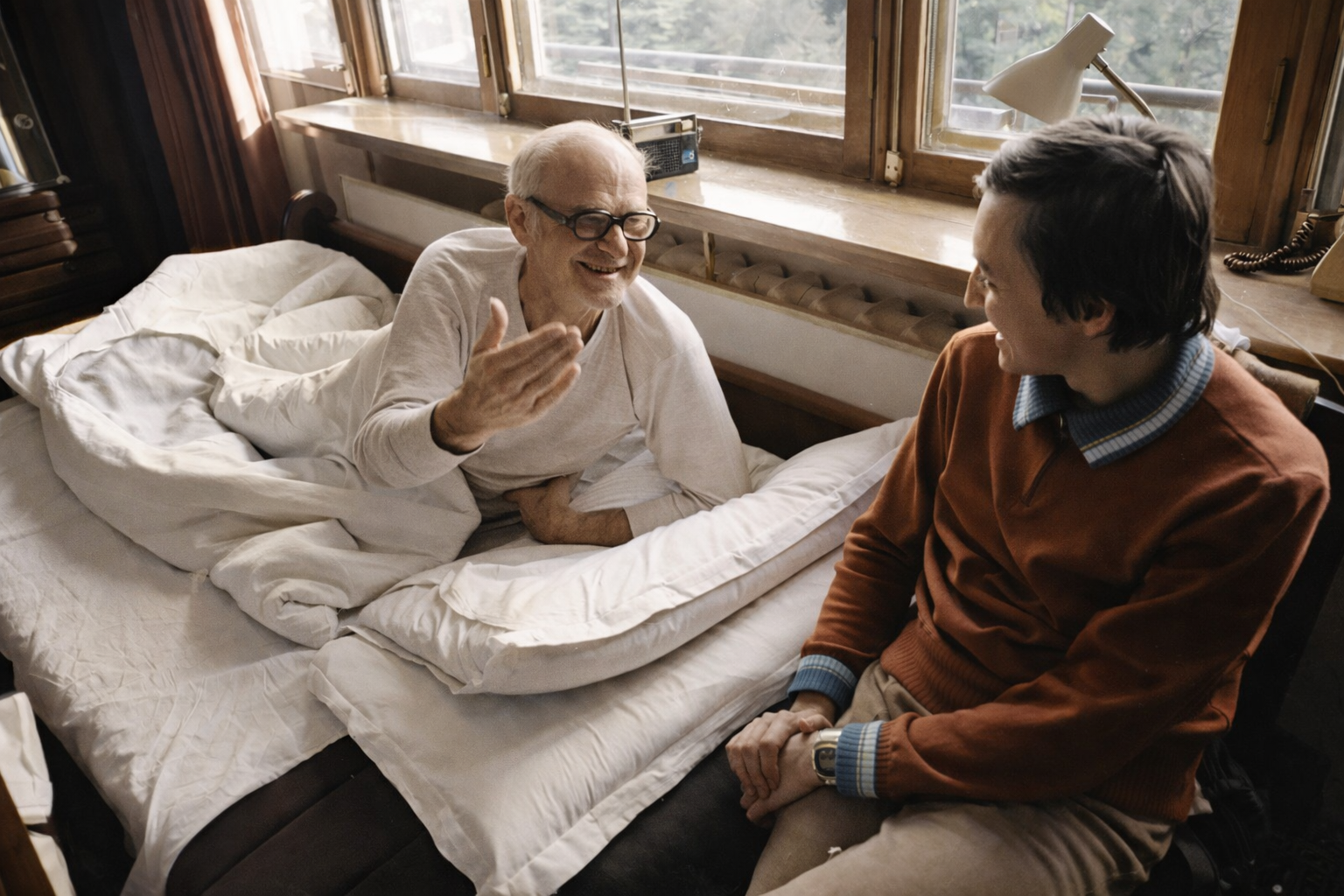
Furman and Karpov
Semyon Furman occupies one of the strangest positions in chess history. He is famous enough that serious students of Karpov know the name instantly, yet obscure enough that many know him only as “Karpov’s trainer.” That sells him short. Furman was a late-blooming Soviet grandmaster, a major opening theoretician, an Honoured Trainer of the USSR, and a trusted analyst for several elite players before he became inseparable from Karpov’s rise. Official Russian sports and chess references place him at the junction of playing strength, theoretical innovation, and coaching authority, which is exactly where his historical importance lies.
Born in Pinsk on 1 December 1920, Furman moved with his family to Leningrad in 1931. There he came under the influence of Ilya Rabinovich, a strong positional master whose taste and work ethic seem to have marked him deeply. Furman was not formed in the glossy modern mold of the junior prodigy. He worked as a fitter in a factory, and his path to the top was unusually late. The Second World War interrupted it altogether. Official Russian sources record him as a veteran of the Great Patriotic War and a recipient of the Medal “For Battle Merit.”
That late development is one of the keys to understanding him. By present-day standards, he bloomed very late. After the war he climbed fast: he shared first in the All-Union first-category event at Gorky in 1945, became a Soviet master in 1946, won the Sverdlovsk semi-final for the 16th USSR Championship in 1947, and then truly arrived with third place in the 1948 USSR Championship, behind only David Bronstein and Alexander Kotov. Russian records also show how durable his domestic strength became: he won the Leningrad Championship in 1953 and shared the lead there again in 1954 and 1957.
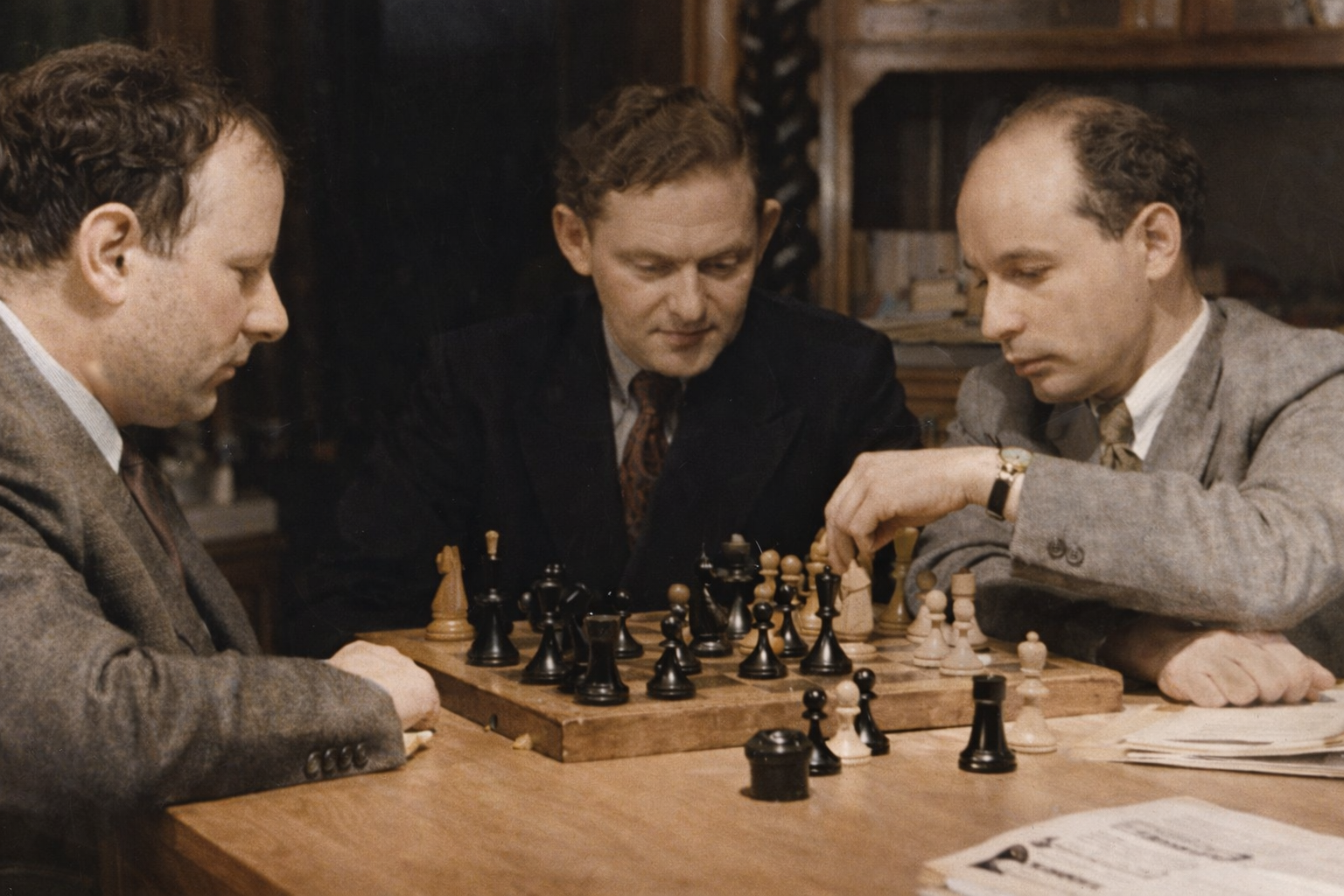
Furman’s practical career afterward was stronger than his later reputation sometimes suggests. He kept returning to the ferocious Soviet championship cycle, finished shared fourth-fifth in the 1965 USSR Championship, won Harrachov in 1966 to secure the grandmaster title in mid-life, and later placed near the top at Madrid 1973, Ljubljana/Portorož 1975, and Bad Lauterberg 1977. He also represented the USSR in the 1961 European Team Championship final at Oberhausen, where he scored 4/7 on board ten for a Soviet team that won all ten matches. Modern commentators have noted that his international résumé looks slimmer than his actual strength partly because so much of his career unfolded inside Soviet domestic championships and qualifiers rather than a wide international circuit. Retrospective systems such as Chessmetrics have even estimated him as high as world no. 11 in 1948, which is not an official ranking, but does help explain why insiders treated him as a player of truly elite strength.
As a player, Furman was celebrated not for theatrical chaos but for pressure that accumulated quietly and then became irreversible. The Russian Chess Federation summary preserves contemporary judgments that he had deep positional intuition, energy in attack, and cold-bloodedness in defense. Karpov later said Furman was vastly stronger with White than with Black, and chess circles nicknamed him the “world champion with White.” That phrase was not just affectionate folklore. Furman’s best games often feel like slow constrictions: the position looks breathable until, several moves too late, the opponent notices that every active square has been repossessed.
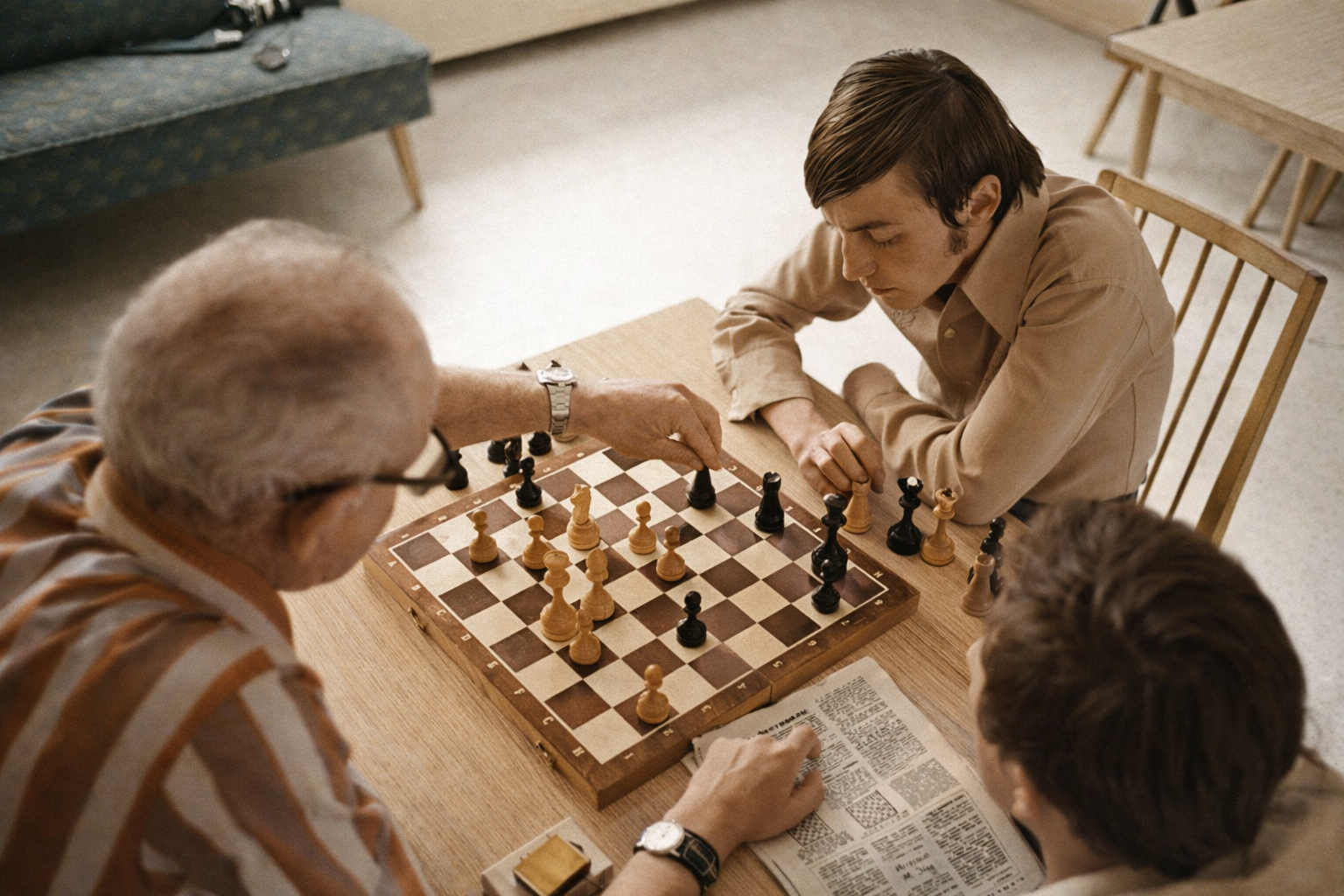
His theoretical reputation was enormous. Official Russian references say that leading figures such as Bronstein, Botvinnik, Petrosian, and Korchnoi sought his advice or training help. The Russian Chess Federation credits him with major contributions to the Grunfeld, Nimzo-Indian, Spanish Game, and Queen’s Gambit, while Douglas Griffin notes that in Soviet usage the Breyer System of the Ruy Lopez was for years called the Furman-Borisenko system. His influence even radiated into one of the most famous matches in chess history: ChessBase has argued that Furman’s game against Efim Geller helped Robert Fischer find the strategic blueprint behind his celebrated sixth-game win over Boris Spassky in Reykjavik.
This is why Furman matters far beyond his own tournament placings. Long before Karpov, he was already one of Soviet chess’s indispensable analytical minds. Griffin reconstructs him as an assistant to Bronstein in the 1951 world championship match, as a second again at Gothenburg 1955 and Amsterdam 1956, and later as a helper to Botvinnik and Korchnoi. By the 1970s, official Russian references note, he was also serving as trainer of the Soviet national team at the 1974 Olympiad and the 1977 European Championship. New in Chess adds another important piece: Genna Sosonko, later a grandmaster of major stature himself, referred to Furman as essentially his only trainer. Furman was one of those rare figures whose most consequential moves were often played from the analysis room rather than the crosstable.
With Karpov, the source trail is slightly tangled and therefore revealing. A Russian biographical account says Furman first encountered the young Karpov at a 1963 training camp connected with Botvinnik. Karpov’s own later recollection stresses a different beginning: once he joined the Red Army club, where Furman was the main trainer, they started working seriously, and in 1969 Karpov transferred from Moscow University to Leningrad University so he could be nearer to him. Those accounts are not actually incompatible. The most sensible synthesis is that an early acquaintance matured into a full training partnership by the late 1960s, with 1969 as the moment when the relationship became central to Karpov’s life and work.
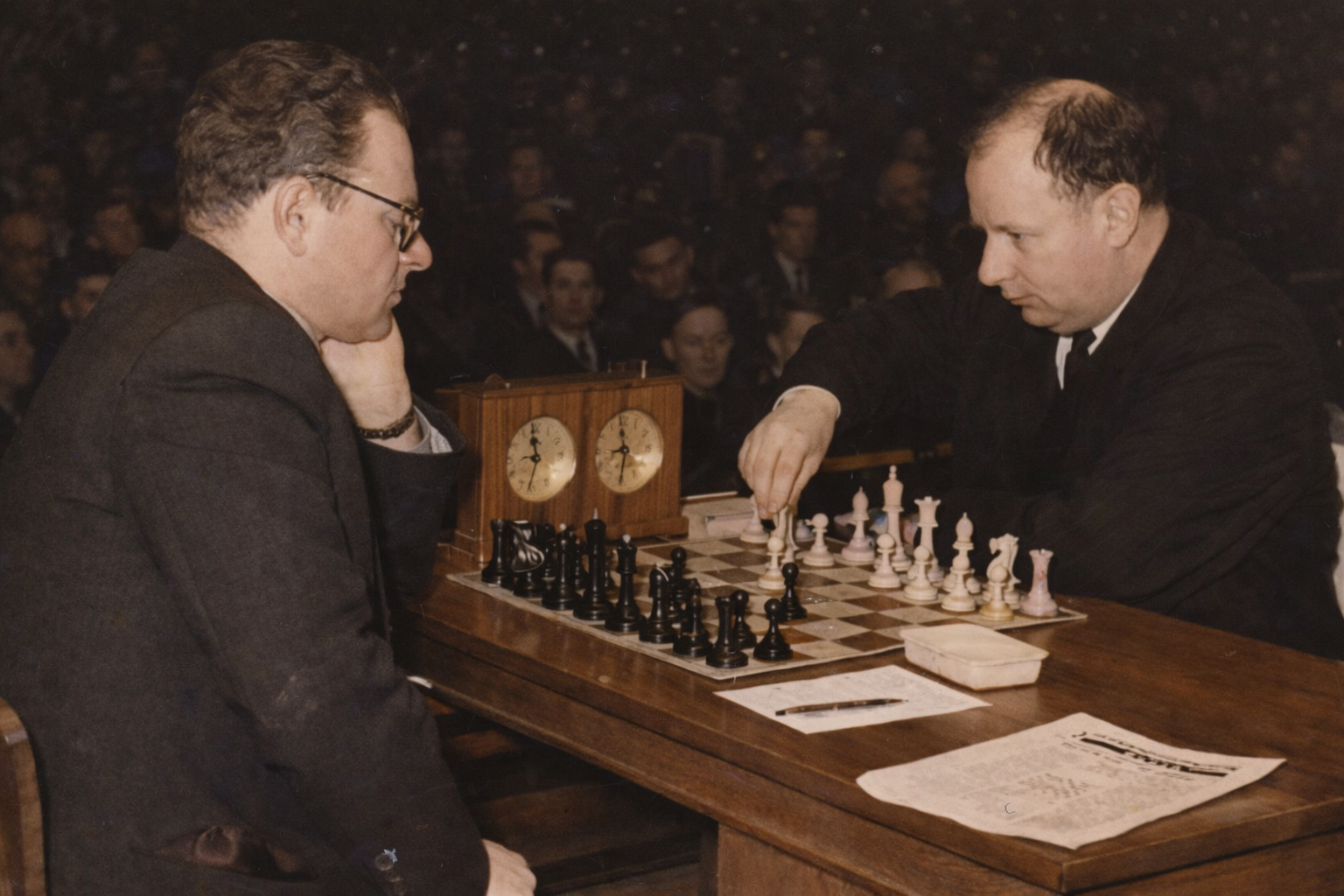
The timing matches Karpov’s surge. At the 1968 Soviet Team Cup in Riga, Karpov scored 10/11 on the first boys’ board for the Soviet Army side. In the years that followed, Furman’s role deepened into something much larger than ordinary coaching. Karpov later wrote that Furman helped him understand the whole science of chess mastery from master level to world champion; in later interviews he emphasized how close they were, praised Furman’s “fantastic knowledge,” and noted that their preparation even fed back into Furman’s own late-career tournament successes. New in Chess summarizes the relationship in its starkest form by quoting Karpov’s later judgment that he “owed everything in chess” to Furman. That is not ceremonial gratitude. It is one world champion identifying one of his chief makers.
The human Furman emerges most vividly in Sosonko’s portrait. He seemed calm, taciturn, even phlegmatic on the surface, and was remembered for the dry line “You ask the questions.” Yet beneath that exterior Sosonko describes passion, stubbornness, and total absorption in analysis. Furman thought about chess continually, often with a pocket set, and could disappear so completely into calculation that conversation simply slid past him. The same sources add that bridge became an obsession in the 1960s, though chess always remained the sovereign obsession. Russian biographical sources also identify his wife as Alla Markovna and note that he had a son, Alexander.
His final years were shadowed by illness. Russian and English-language chess sources agree that Furman underwent surgery for stomach cancer in the mid-1960s, that he was a heavy smoker, and that the disease later returned. He died in Leningrad in mid-March 1978, only a few months before the Karpov-Korchnoi world championship match at Baguio. There is a small bibliographic wrinkle here: many English references give 17 March, while some Russian references give 16 March. The larger fact is uncontested. Karpov went into one of the defining matches of his career without the mentor he considered irreplaceable. Russian memorial sources add that Furman memorial tournaments began in 1982.
To study Furman the player rather than Furman the legend, a compact canon would begin with Furman-Keres and Furman-Taimanov from the 1948 USSR Championship, Furman-Smyslov and Furman-Petrosian from 1949, Furman-Panno from Madrid 1973, and his late-career games from Bad Lauterberg 1977. Together they show why contemporaries respected him so deeply: he was not just a trainer who happened to play well, but a genuine grandmaster whose ideas, methods, and standards seeped into several generations of Soviet chess. The cleanest historical verdict is this: Furman was one of the great hidden architects of twentieth-century chess, a man whose name belongs not in the footnotes to Karpov’s career but in the structural beams that held it up.
Sources
Griffin, Douglas. Soviet Chess Masters: Biographies and Games. Chess History Press, 2020.
Russian Chess Federation. “Семен Абрамович Фурман.” Ruchess.ru. https://ruchess.ru/en/persons_of_day/semyon_furman/
Sosonko, Genna. Russian Silhouettes: Portraits of Soviet Chess. 3rd Edition, 2009. https://archive.org/details/64GreatChessGames/Russian%20Silhouettes%20%283rd%20Ed%2C2009%29_djvu.txt
OlimpBase. “European Team Chess Championship 1961: Semyon Furman.” https://www.olimpbase.org/1961e/1961urs.html
dGriffinChess. “Semyon Furman (1920–1978).” https://dgriffinchess.wordpress.com/2020/11/30/semyon-furman-1920-1978/
VNIIFK Chess Archives. “Фурман Семен Абрамович – советский шахматист.” https://es.vniifk.ru/2025/03/05/фурман-семен-абрамович-ссср-шахматы/
