How the Early Soviet State Turned Chess Into a Tool
A look inside the origins of Soviet chess culture. These articles trace how early USSR institutions and political leaders transformed chess into a tool for education, discipline, and national development, setting the foundation for decades of dominance in world chess.
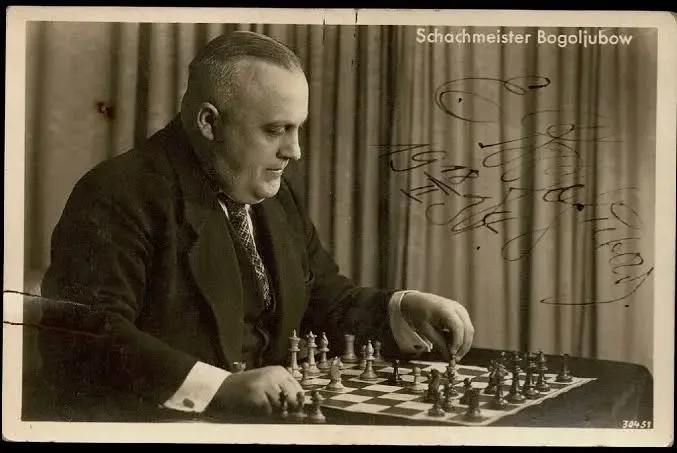
Efim Bogoljubow (Ефим Боголюбов)
One of the most imaginative players of the early twentieth century, Efim Bogoljubov (Bogoljubow) represented both the Russian Empire/Soviet Union and Germany. His career pivoted at Mannheim 1914, where World War I broke out, and he and other Russian masters were interned; during this period, he honed his tactical vision through blindfold games with Alexander Alekhine and married a German schoolteacher. After the war, he settled in Germany and became a tournament star, winning Bad Pistyan in 1922 and then the Soviet championships of 1924 and 1925. In 1925, he won the Moscow International tournament ahead of former world champions Emanuel Lasker and José Raúl Capablanca and also captured the German championship, making him the only player ever to hold both titles simultaneously. Bogoljubov later became a German citizen and twice challenged Alekhine for the world championship (1929 and 1934) in matches celebrated for their fighting spirit. Though he never won the crown, he remained an active competitor and trainer, winning German events in the 1930s and coaching the national team; he faced discrimination under the Nazi regime and did not receive the grandmaster title until 1951. He died in Triberg in 1952, leaving behind dynamic games and a notable contribution to opening theory—most famously the Bogo‑Indian Defense.