Vladimir Savon
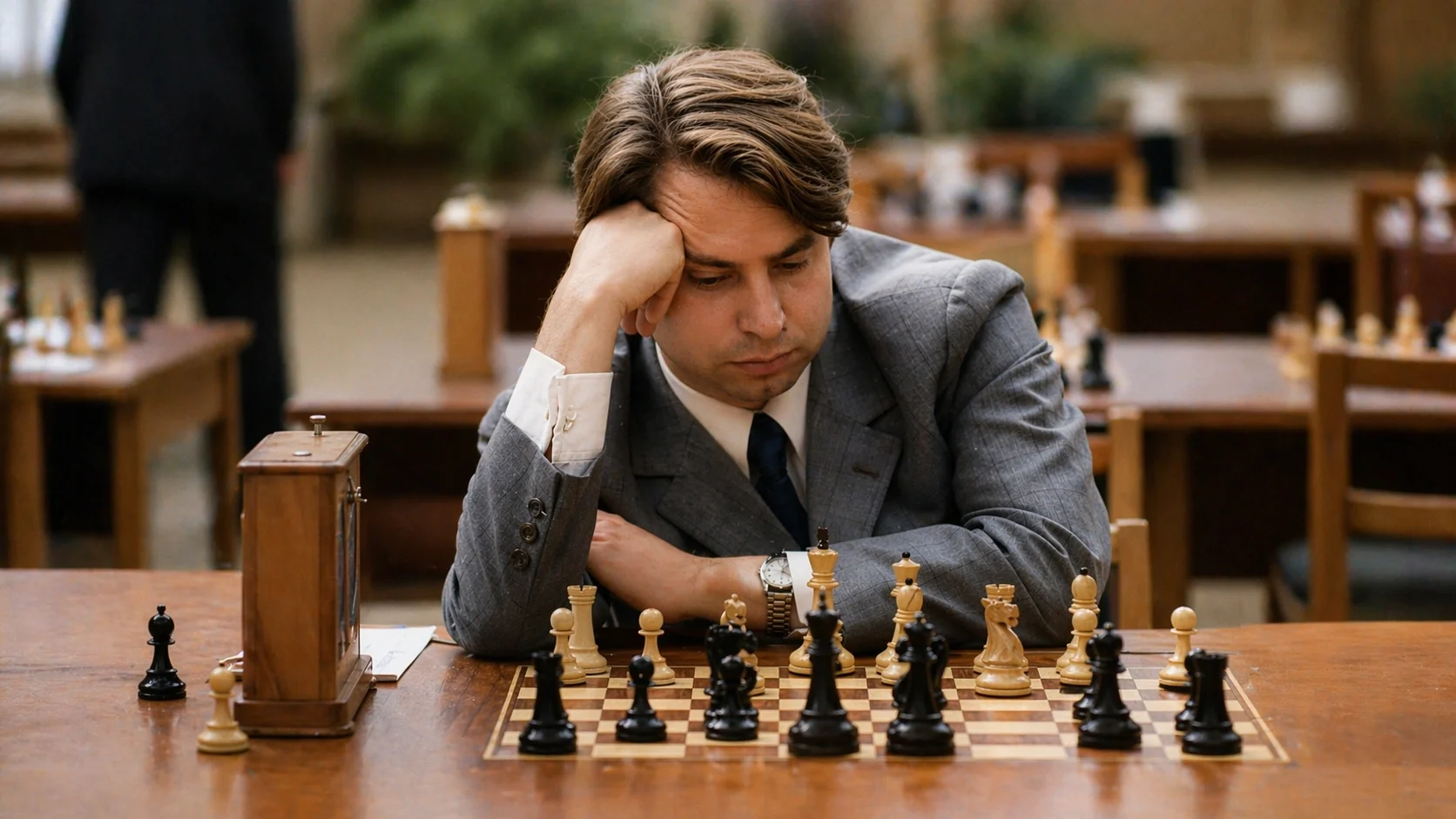
Vladimir Andreyevich Savon was a Kharkiv-based grandmaster of the late Soviet Union whose competitive summit came in a very narrow but very real burst of top-level strength between 1970 and 1975. In that span, he beat Mikhail Tal in a Soviet Cup mini-match, won the 39th Soviet Chess Championship undefeated by a margin of 1.5 points, joined the gold medal-winning Soviet team at the 20th Chess Olympiad, reached the interzonal at Petropolis, and hovered near the edge of the world top twenty on the official rating list. The archival rating record gives him 2595 in July 1972, with a historical FIDE rank of No. 15; later encyclopedia-style summaries often round that figure to 2590.
His biography also illuminates several layers of postwar chess history. He emerged from a provincial Ukrainian childhood, moved into the strong chess culture of Kharkiv, prospered within the Soviet student-team system, and later became an important trainer for the next generation of Ukrainian players. Official and semi-official sources connect him, directly or indirectly, with the formative years of Ruslan Ponomariov, Alexander Moiseenko, Sergey Karjakin, and Yuri Kuzubov. Yet the record is uneven. His tournament career is well preserved. His domestic biography is much thinner. Even basic facts such as his exact birth date, the age at which he learned chess, and the date of his death vary across sources.
Biography and formative milieu
The best-supported version of Savon’s early life begins with birth in Chernihiv on 26 September 1940, the date used by the official retrospective of the Russian Chess Federation and by the FIDE rating archive as reproduced by OlimpBase. Alexander Moiseenko’s later biographical book adds the clearest family detail now easily accessible online: Savon’s father, Andrei Ivanovich Savon, returned after the war, was a career military officer, and retired with the rank of lieutenant colonel. The family then settled in Lebedyn, where the future grandmaster spent his school years and first encountered chess through his father.
The educational line is firmer than some of the childhood chronology. Standard reference entries state that Savon learned the moves at thirteen, became a Soviet Master of Sport in 1960, and later received the international master title in 1967. A surviving interview excerpt published in a memorial context offers a different recollection in Savon’s own voice: that his father taught him “rather late,” at age eleven. The same biographical tradition places a later move to Kharkiv, after which his life became bound to that city. He completed his studies in economics at Kharkiv State University, and virtually all later playing, teaching, and memorial activities associated with him were in Kharkiv rather than in his birthplace.
The sources are much less informative about Savon’s mother, siblings, spouse, or children. Public obituaries focus overwhelmingly on his chess achievements and later coaching. His death is likewise imperfectly documented online. Memorial and retrospective pages commonly place it in Kharkiv at the end of May 2005, with 31 May appearing often, while other reference pages give 30 May or 1 June. A contemporary TWIC notice reported that he had died in Kharkiv and that the funeral was on 1 June 2005. For an academically cautious synthesis, “late May 2005 in Kharkiv” is the most defensible wording.
Soviet and international chess career
Savon’s rise was gradual through the 1960s and then suddenly steep around 1970. Douglas Griffin’s reconstruction, drawing on Soviet periodicals and later memoirs, places him in the final of the Ukrainian championship already in his late teens and confirms the Master of Sport title in 1960. Throughout the 1960s, he was a regular in the Soviet student-team system and a repeated qualifier for Soviet championship finals, even if without headline placements at first. The official Russian Federation summary calls him a five-time winner of the world student team competition over the decade, and the standard year list runs from 1962 through 1967. OlimpBase further shows that at the 1965 student championship in Sinaia, he scored 9 out of 11 on board one, the best first-board performance in the field.
The first major crest came in 1970. Griffin describes that year as the moment Savon entered the top echelon of Soviet chess. He reached the Soviet Cup semifinals after eliminating Tal in the quarterfinals, and he finished fifth through seventh in the 1970 USSR Championship alongside the young Anatoly Karpov. The next year, he shared second through third at Mar del Plata, showing that the Soviet Cup result had not been a freak occurrence. His earlier international credentials included victory in the 1965 Allied Armies Championship in Budapest, as well as Soviet representation at events in Hungary, Yugoslavia, and Cuba.
Then came the result on which his historical reputation still stands. In Leningrad in autumn 1971, Savon, still formally only an international master, won the Soviet championship undefeated with 15 out of 21, scoring nine wins and finishing 1.5 points ahead of former world champions Vasily Smyslov and Tal. The official federation notice emphasizes both the absence of losses and the scale of the margin. That mattered even more because the field included much of the Soviet elite. The surprise was immediate enough that later biographical writing preserved the foreign press's reaction as “Who is Mr. Savon?”
Savon’s next four seasons confirmed that 1971 was a genuine peak and not a random spike. In 1972, he again finished strongly in the Soviet championship, tied for third through fifth according to the major summaries, and he also took clear second behind Tal in the Sukhumi international. His inclusion in the Soviet Olympiad team followed naturally. OlimpBase records his result in Skopje as 4.5 out of 8 on the second reserve board, a modest personal score by Soviet standards, while the event report states plainly that he was out of form and lost two games. In 1973, he played the interzonal at Petropolis and finished eighth of eighteen. The same year also effectively marks his transition from IM to grandmaster in the official rating archive, which shows him as “m” in July 1972 and “g” by July 1973. In 1975, he shared first through fourth in the zonal at Vilnius, then missed interzonal qualification after the playoff at Sochi.
Several later achievements reinforce the picture of Savon as a strong international grandmaster even after the title year. Official retrospectives credit him with first prizes in Moscow, Budapest, Debrecen, and Pernik. Griffin adds a second-place finish behind Tal at Sukhumi in 1972 and notes a creditable plus-two interzonal result in 1973. The rating archive supports sustained high standing: 2595 in July 1972, then 2575 in July 1973, May 1974, and January 1975. His later ratings fell, yet he remained a titled and active player for decades, with a still-respectable 2449 on the October 2001 list.
Historical context and transnational connections
Savon’s career makes the most sense when placed inside the institutional ecology of Soviet chess. The student world team championship was not a casual youth outing. Roman Pelts, in an interview published by the Russian Federation, recalled that Soviet failures in the early 1960s drew sufficient attention to involve the party center; the response included serious training camps at Bakovka, guidance from Igor Bondarevsky, and practical input from top grandmasters such as Tigran Petrosian and Boris Spassky. In that setting, Savon’s repeated selection through the decade indicates that he was trusted by the Soviet chess bureaucracy as a reliable high-level team player well before the broader public noticed him.
The Ukrainian dimension is equally important. Moiseenko’s biography sketch places his school years in the provincial town of Lebedyn, followed by a decisive transfer to Kharkiv, a city with strong chess traditions and a deeper institutional base. Griffin’s citation of Vladimir Tukmakov shows Savon’s place within the Ukrainian hierarchy: behind the established leaders, above many other national-team aspirants, and always recognized as a serious player. Tukmakov also suggests that Savon’s rise accelerated when the success of younger Ukrainian contemporaries stirred his ambition. In that sense, Savon stands between the earlier generation of Efim Geller and Leonid Stein and the later Kharkiv-centered coaching generation that he himself would help form.
The Belarusian and Cuban connections are real, though asymmetrical. Belarus enters his story most vividly through the testimony of Albert Kapengut, who remembered serving in the army together with Savon in 1966 and still being recruited into the Soviet student team, a revealing example of how Soviet institutions could bend formal categories when chess success was at stake. Cuba appears in the record more as a site of Soviet international assignment than as a long-term base. Griffin notes that Savon represented the USSR in tournaments in Hungary, Yugoslavia, and Cuba. I found no comparable evidence of a later Cuban coaching chapter on the scale of his Ukrainian work.
His 1971 title also belongs to the larger world-championship climate of that year. Later commentators, drawing on Bernard Cafferty and Mark Taimanov’s book The Soviet Championships, called Savon’s victory “the least plausible result for decades.” One explanation they advanced was the psychological shock produced by Bobby Fischer’s demolition of Soviet stars in the Candidates cycle, with the Petrosian match still unfolding as the USSR Championship ended. Whether or not that theory fully explains anything, it captures the atmosphere in which Savon’s breakthrough was perceived: his victory came at a moment when Soviet chess authority itself felt unusually vulnerable.
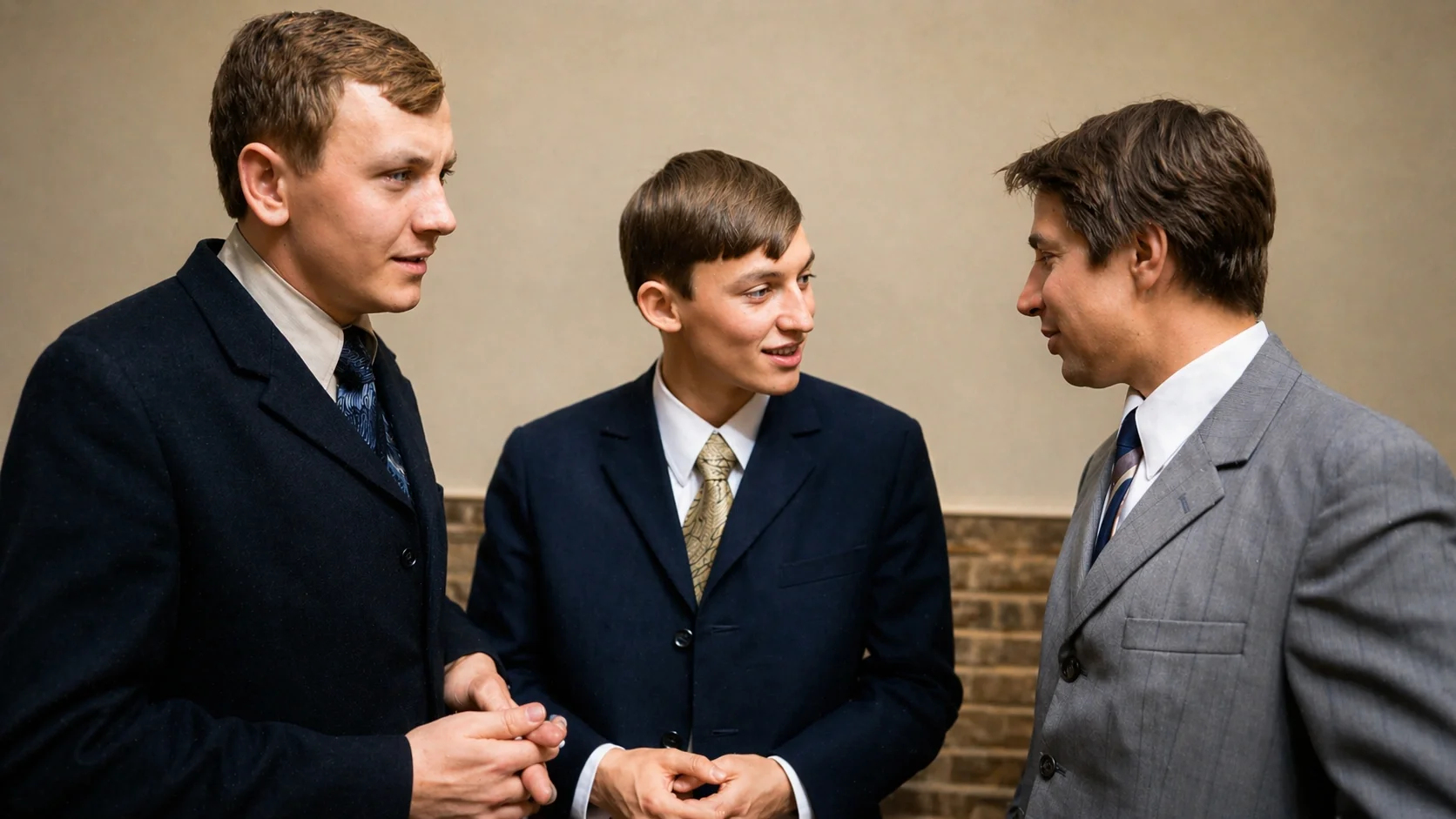
Balashov, Karpov, Savon
Style, reputation, and contributions
On style, the sources converge more than they do on biography. The official Russian Federation retrospective describes Savon’s best play as interesting and substantial, grounded in exact calculation. A further surviving snippet from Moiseenko’s biography quotes an earlier assessment that Savon was progressing from event to event, combining well and seeking sharp positions that demanded precise calculation. Tukmakov’s later recollection widens that portrait: Savon was versatile, especially strong in dynamic positions with the initiative. The composite image is of a player who could handle both strategic and tactical tasks, though whose reputation rested most heavily on practical dynamism married to clean calculation.
The social part of his reputation is also striking. Tukmakov’s memoir, as quoted by Griffin, presents Savon as a simple, kind, provincial man who did not naturally move in the self-confident metropolitan circles of the Soviet elite. That helps explain why his sudden 1971 triumph produced so much astonishment. The same book material preserves the line “Who is Mr. Savon?”, which captures both the surprise and a certain historiographical injustice. He was a nobody inside the Soviet system. He was a long-serving student-team stalwart, a repeated finalist, and an established Ukrainian master. He simply lacked the aura of publicity that the world champions and celebrity grandmasters around him had.
His contributions beyond tournament play were real, though they did not take the form of a large written oeuvre or a named opening system. Griffin notes that Savon annotated relatively few of his own games in the Soviet press, suggesting a limited published writing footprint compared with some of his more literary contemporaries. What survives most clearly are interviews, selected annotations in periodicals such as Shakhmaty v SSSR, lectures, and simultaneous exhibitions. Memoir evidence also places him on lecture and exhibition circuits before Petropolis, and, after the 1971 title, on politically inflected goodwill tours in Chile. The theoretical residue of Savon’s career, therefore, lies mostly in instructive games and transmitted coaching wisdom, rather than in a heavily documented body of authored chess literature.
Later life, coaching, and legacy
Savon’s later public identity shifted from star player to mentor. The official Russian Federation profile states that he trained almost all members of the Ukrainian national team in one period or another, worked at the club Yurakademia from 1996 to 2001, and later worked at the chess club in Kramatorsk. Contemporary and retrospective sources add concrete names: a 2005 obituary said he had recently been helping Ponomariov and a young Karjakin; later notices and biographical sketches identify Moiseenko and Kuzubov among the heirs of his training environment. This body of evidence supports a strong claim that Savon’s later influence on Ukrainian chess exceeded the size of his formal playing record after 1980.
His playing life, however, did not end early. The FIDE archive preserved by OlimpBase records him as active through 2001, and retrospective notes remember him still testing younger players in late round robins and veterans events. One memorial piece states that his last major tournament success came in Satka, where he won a CIS veterans event. That continuing practical activity helps explain why his students remembered him less as a distant legend than as a living Kharkiv authority who still sat down and played.
His commemorative afterlife is unusually visible. The Ukrainian Chess Federation archive shows rapid tournaments in his memory in Kharkiv beginning in 2007 and continuing through at least 2019; an archived page documents the tenth edition in 2015. In 2022, amid wartime dislocation, chess organizers were still publicizing an online tournament dedicated to his memory. Historiographically, Savon has long hovered between fame and neglect. Griffin opens his English article by noting that many chess fans no longer know the name; a 64 review spoke of the “forgotten champion”; the real corrective has been Moiseenko’s 2020 biography, Grossmeister Savon. Champion i nastavnik, which is now the central full-length tribute to his life and work.
Gaps and uncertainties
Savon’s record contains several stubborn factual inconsistencies. The strongest date cluster favors 26 September 1940 as his birth date: it appears in the official Russian Federation retrospective and in the rating archive. Even so, other secondary sources have circulated 25 February 1940 or 26 February 1940. A related place confusion also appears in the biographies. Official retrospectives say he was born in Chernihiv, while a 2005 obituary called him a native of Lebedyn. Moiseenko’s biographical material seems to reconcile the contradiction: born in Chernihiv, he spent his school years in Lebedyn after the family settled there following the war.
The age at which he learned chess is another small but revealing uncertainty. A memorial page quoting Savon himself says that his father taught him at age 11. Standard encyclopedia-style entries often say thirteen. His death date is also unstable online, with 30 May, 31 May, and 1 June 2005 all attested. Even the later-career injury narrative varies. The official federation retrospective places a devastating bottle attack at a tournament somewhere in the 1970s and stresses the migraines that followed; Tukmakov’s recollection, transmitted by Griffin and sourced to his memoir Profession: Chessplayer, dates the major injury specifically to 1980 in Dnepropetrovsk during qualification for the 48th USSR Championship. Those discrepancies do not undermine the broad arc of his life, but they do show that Savon still lacks the fully stabilized documentary biography enjoyed by the most canonized Soviet grandmasters.
The final historiographical gap is qualitative rather than factual. Savon’s results are easy to prove. His inner life, domestic world, and pedagogical method are harder to reconstruct. The online record is dominated by short federation notices, obituaries, tournament archives, and fragments of memoirs. Moiseenko’s biography has clearly become the foundational modern source, which is itself telling. Savon’s place in history now rests on a combination of hard tournament evidence, vivid peer testimony, and a later act of student remembrance. That is enough to establish him as far more than a one-tournament wonder, though still not enough to claim that every contour of his life is securely pinned down.
