Paul Keres
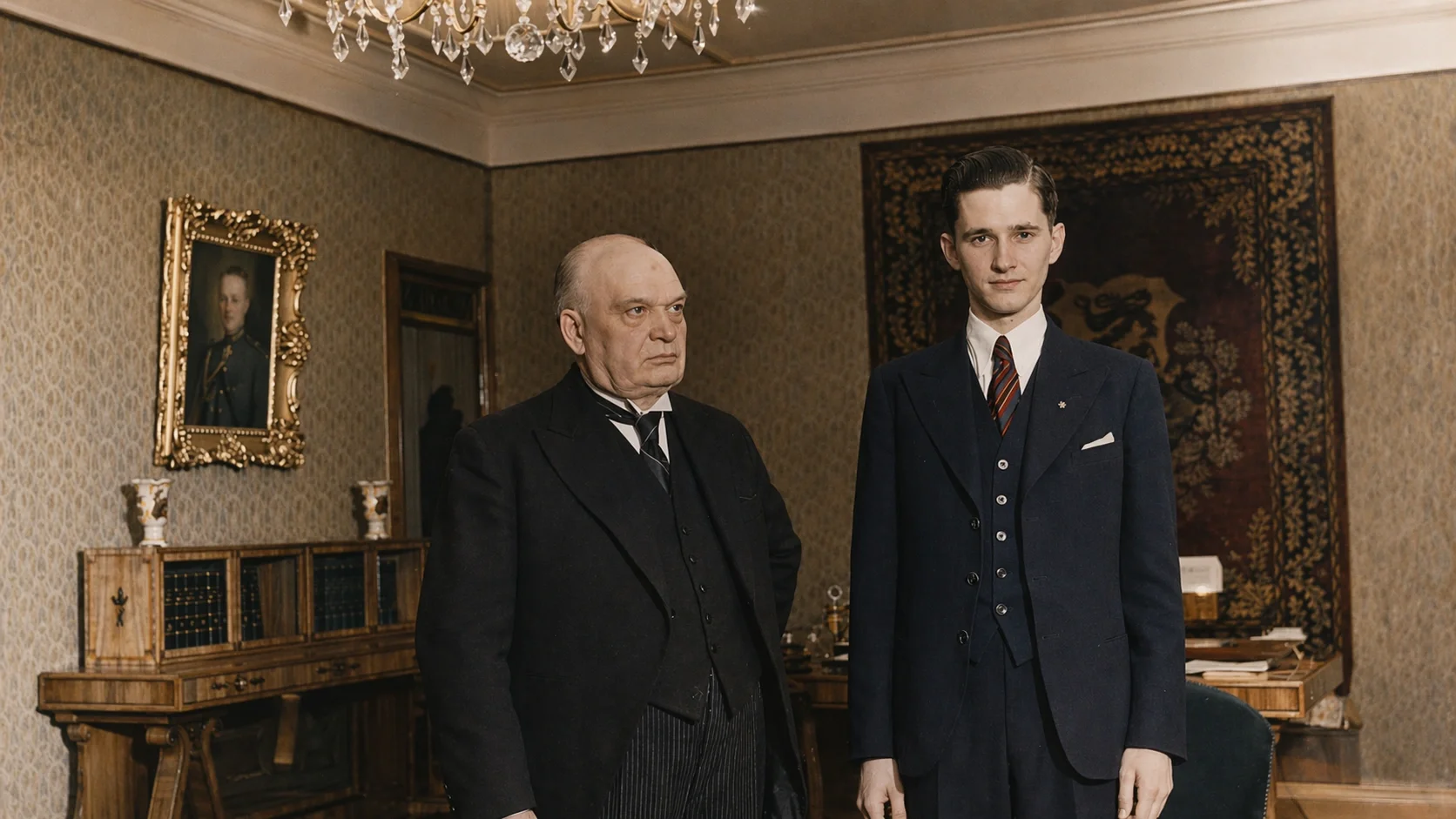
Konstantin Päts ja Paul Keres, 1938
Paul Keres was born on January 7, 1916, in Narva, Estonia (then part of the Russian Empire). He grew up in the coastal city of Pärnu and learned chess as a child from his father and older brother. In an era of limited chess resources, Keres taught himself by solving newspaper chess puzzles and painstakingly compiling a handwritten collection of nearly 1,000 games. As a teen, he became a national chess prodigy – a three-time Estonian schoolboy champion (1930, 1932, 1933) – and honed his skills through correspondence chess, reportedly playing hundreds of postal games (sometimes 150 at once). This extensive practice matured his play, and at age 19 he won the Estonian national championship for the first time in 1935. Keres pursued higher education in 1937, studying mathematics at the University of Tartu, and for a time dabbled in journalism, but ultimately he committed to a career in chess.
Keres’s breakthrough on the world stage came in the mid-1930s. At 19, he debuted for Estonia on top board at the 1935 Warsaw Chess Olympiad, dazzling observers with a bold attacking style. Over the next few years he amassed a string of international successes against elite competition. Notably, he tied with former World Champion Alexander Alekhine for first place at Bad Nauheim 1936, and won the prestigious Semmering–Baden tournament in 1937 ahead of luminaries such as José Raúl Capablanca, Reuben Fine, and Samuel Reshevsky. In 1938, Keres confirmed his status as a world-title contender by triumphing (on tiebreak) at the legendary AVRO tournament in the Netherlands, an all-star double round-robin often considered one of the strongest tournaments ever held. Keres went undefeated at AVRO and scored 8½/14, finishing ahead of no fewer than four world champions (including Botvinnik, Euwe, Alekhine, and Capablanca). This victory made him the “natural successor” to World Champion Alekhine in the eyes of the chess world. Plans were laid for a Keres–Alekhine championship match, but the outbreak of World War II and geopolitical turmoil intervened, scuttling those negotiations.
During World War II, Estonia’s fate—and Keres’s career—were swept up in the conflict. The Soviet Union occupied Estonia in 1940, then Nazi Germany seized it in 1941, before the USSR reoccupied the country in 1944. Keres, as an Estonian, found himself compelled to participate in chess events under both Soviet and German auspices in those years. He played in a series of strong tournaments organized or sanctioned by Nazi authorities, including events in Salzburg, Munich, and Prague, often competing against Alekhine. Keres performed brilliantly: for example, he won the 1942 Estonian Championship in Tallinn with a perfect 15–0 score and swept another tournament in Posen 1943 with 5–0. He finished second to Alekhine in three major events (Salzburg 1942, Munich 1942, Prague 1943) and tied Alekhine for first at Salzburg 1943. Despite the collaborative appearance of playing in Nazi-sponsored tournaments, Keres was careful about larger implications – he notably refused Alekhine’s proposal to hold a “World Championship” match under German patronage, reasoning that winning such a match would be meaningless (a title valid only in Nazi-occupied territories) and losing it would ruin his chance to challenge for a legitimate world title after the war.
As the war turned against Germany, Keres sought to avoid Soviet reprisals. In mid-1944, with the Red Army approaching, he attempted to flee Estonia by boat (alongside other Estonian intellectuals), but the escape failed when their ship never arrived. After the Soviet reoccupation, Keres’s wartime activities drew deep suspicion from Soviet authorities. A 1942 interview he had given (used in Nazi anti-Soviet propaganda) and his participation in German tournaments led to accusations that he was a Nazi collaborator. For a time Keres was interrogated by the NKVD; he may even have been detained, though exact details remain murky. According to some accounts, Soviet officials initially planned to execute Keres for treason until influential figures intervened on his behalf. One oft-cited story credits Mikhail Botvinnik – soon to be the Soviet Union’s leading chess figure – with personally appealing to Stalin to spare Keres’s life. Keres himself wrote a letter to Soviet leader Vyacheslav Molotov professing his loyalty and pleading to be allowed to return to competitive chess. It seems likely that, as a condition of political “rehabilitation,” Keres had to tacitly accept that he would not obstruct the ascent of Soviet chess’s chosen Russian champion (Botvinnik) in coming events.
By 1946–47, Keres was cleared to re-enter competition, but Soviet authorities remained cautious. He was pointedly left off the USSR team for the famous 1945 USA–USSR radio match, and was not sent to the first big post-war international tournament (Groningen 1946). Nevertheless, once fully reinstated, Keres quickly proved his form. He dominated the 1944/45 Baltic Championship in Riga (10½/11) and then won the 1945 Estonian Championship (Tallinn) ahead of a field of top Soviet masters. In 1947, with Botvinnik absent, Keres captured the USSR Championship in Leningrad – his first of three Soviet titles (he would repeat as USSR champion in 1950 and 1951). His return was not without controversy: at the 1947 championship, some competitors openly resented his presence, with one opponent, after beating Keres, exclaiming “I killed a fascist!”. Nonetheless, Keres had survived the most perilous chapter of his career, albeit at great personal cost to his World Championship ambitions.
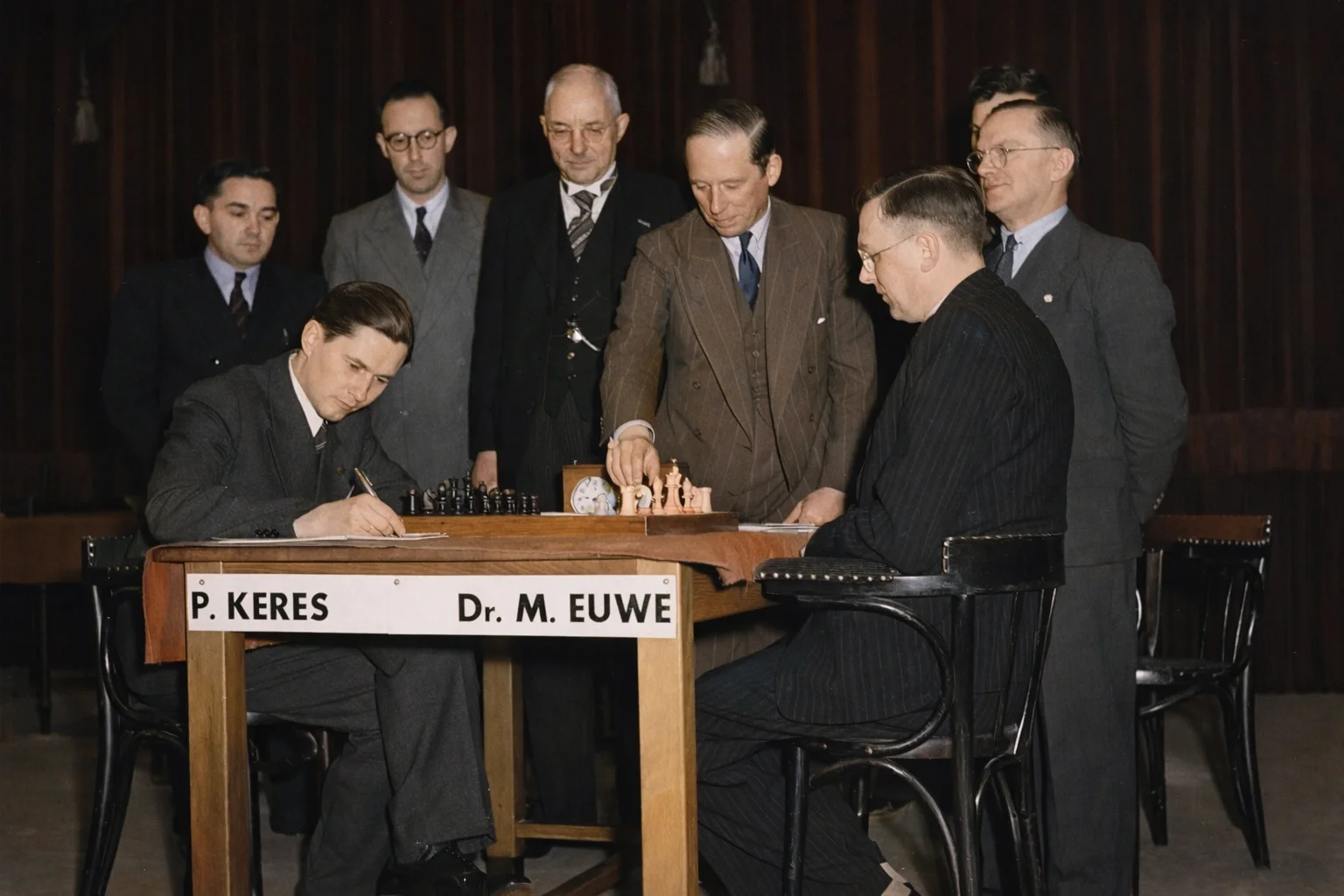
World championship chess in The Hague (1948). Keres vs. Euwe
Post-War Career and World Championship Contention (1948–1965)
Although Keres resumed his place among the world’s elite after WWII, the political shadows of the war years continued to loom over his quest for the World Championship. In 1948, FIDE organized a five-player tournament to crown a new World Champion following Alekhine’s death. Keres played in this historic event (The Hague/Moscow 1948) alongside Mikhail Botvinnik (the Soviet favorite), former champion Max Euwe, and future champions Vasily Smyslov and Samuel Reshevsky. Going in, Keres was widely considered the chief rival to Botvinnik. He began impressively with a “sparkling” attacking win over Euwe in the first round. However, in their head-to-head games, Keres lost his first four encounters to Botvinnik in puzzling fashion, including an uncharacteristically meek 23-move loss. Only once Botvinnik had secured an insurmountable lead did Keres manage to defeat him in their final meeting. Keres ultimately tied for third place, while Botvinnik won the tournament (and the title) handily. These results immediately fueled speculation that Keres had been pressured to “throw” games to ensure a Soviet–Russian champion. Modern historians who have studied the evidence (such as Taylor Kingston) believe that Soviet sports officials indeed gave Keres “strong hints” not to derail Botvinnik’s path, though Botvinnik himself may not have known this until halfway through the event. Keres’s own play in 1948 showed an uncharacteristic reluctance to seize opportunities against Botvinnik, suggesting that the psychological weight of prior coercion affected his performance. Decades later, when asked why he never became world champion, Keres responded wryly: “I was unlucky, like my country.”
Despite the setback of 1948, Keres remained a dominant force through the 1950s and early 1960s. He became a perennial World Championship Candidate, the last hurdle before a title match. In total, he participated in six Candidates’ cycles and remarkably finished second (or tied for second) in four consecutive Candidates tournaments: Zürich 1953 (tied 2nd–4th), Amsterdam 1956 (2nd), Yugoslavia 1959 (2nd), and Curaçao 1962 (tied 2nd). No other player has ever accumulated as many runner-up finishes in Candidates events. This streak earned him the bittersweet nicknames “Paul the Second” and the “Crown Prince of Chess,” reflecting his status as the greatest player never to become world champion. Each attempt saw Keres come agonizingly close: for instance, at Zürich 1953 he was only two points behind Smyslov, and at Amsterdam 1956 just 1½ points behind Smyslov. In the 1959 Candidates (a grueling quadruple round-robin), the 43-year-old Keres put on a mighty effort, even scoring 3–1 in his individual games against the eventual winner Mikhail Tal, but Tal’s superiority against the rest of the field kept Keres in second place. Similarly, at Curaçao 1962, Keres was tied for second just half a point behind Tigran Petrosian; a penultimate-round upset loss to Pal Benko (an opponent Keres had dominated historically) cost him a likely title shot. That 1962 tournament was marred by Bobby Fischer’s public accusations that Petrosian, Keres, and Geller had pre-arranged quick draws among themselves. In fact, the three Soviet players did agree to many short draws (partly to cope with the exhausting 28-round schedule in the tropical heat), but contemporary analysts note this collusion only mattered because Fischer himself faltered badly in the event. In any case, Petrosian edged out Keres for the right to challenge Botvinnik in 1963.
Even as he chased the world title, Keres compiled a superb tournament record in general play. He was a three-time champion of the Soviet Union (1947, 1950, 1951), at a time when the USSR Championship was arguably the strongest tournament in the world. He represented the USSR in seven Chess Olympiads between 1952 and 1964, contributing to team gold medals each time. Keres’s personal Olympiad performance was staggering: over 10 Olympiads (including pre-war appearances for Estonia), he scored roughly 80% overall, playing top or near-top board. He also won numerous international tournaments across four decades. For example, he took first at prestigious events such as Hastings 1957–58 (ahead of Smyslov), and he remained competitive with the next generation of stars. In 1965, at age 49, Keres qualified for the Candidates yet again (under a new format of head-to-head matches), but he finally met his match against a rising Boris Spassky in the quarter-finals, losing a hard-fought match 4–6. That 1965 loss to Spassky was notably the only match defeat of Keres’s career, as he had otherwise won or drawn all previous individual matches.
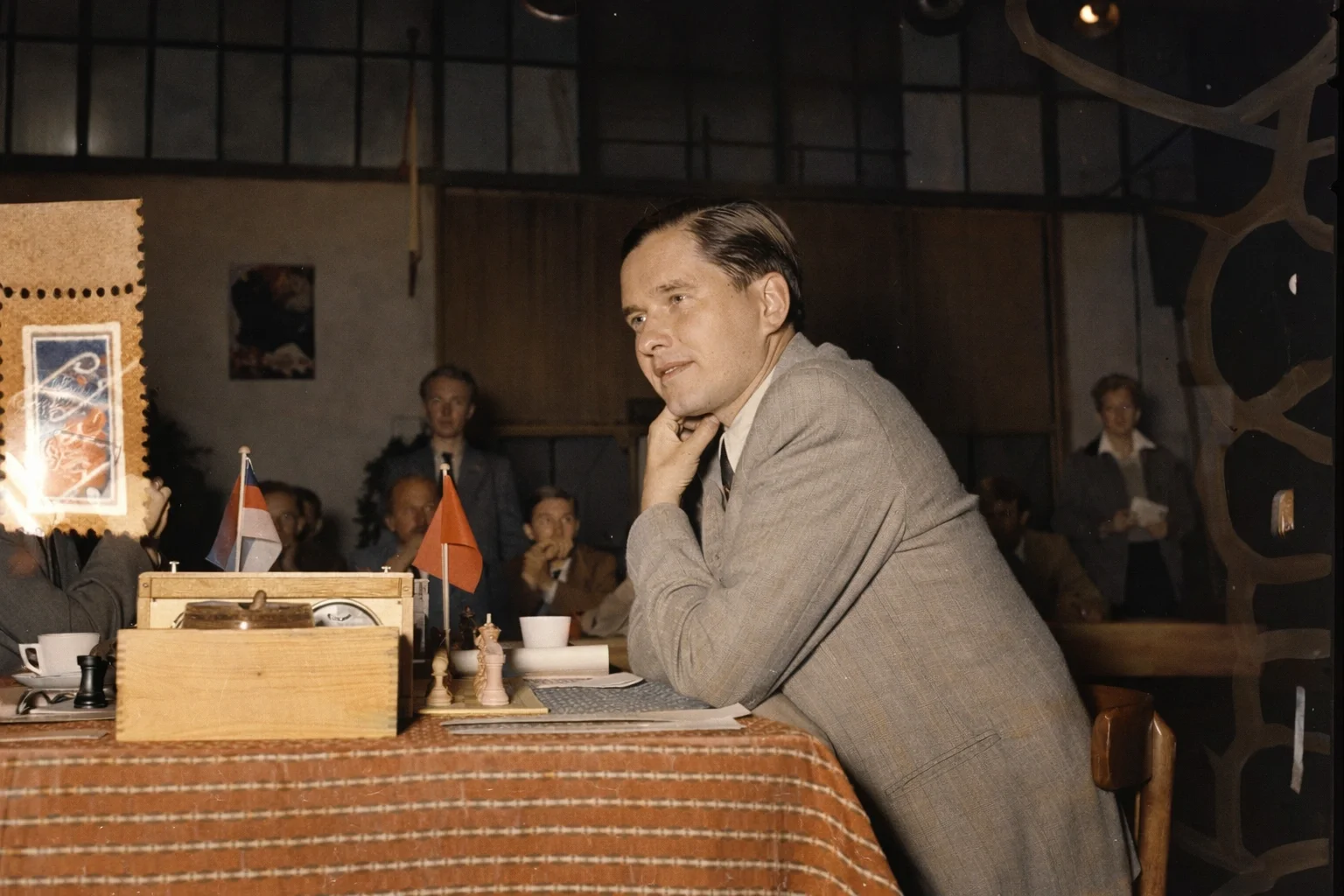
Notable Games and Opening Innovations
Throughout his long career, Paul Keres was renowned for a universal style marked by attacking flair, deep strategic insight, and inventive opening play. He produced many famous games that showcased his prowess. For example, at Margate 1937, the 21-year-old Keres defeated World Champion Alexander Alekhine in just 24 moves, outplaying Alekhine “in the first 15 moves” and capping the game with a pair of elegant combinations. At the AVRO 1938 tournament, Keres won a brilliant attacking game against former champion José Raúl Capablanca; the battle featured “unpredictable jumps” of Keres’s knight that “slowly destroy[ed] Black’s position”, leading to a beautiful tactical finish. In later years he continued to deliver masterpieces – for instance, in the 1954 Olympiad he unleashed a classic Sicilian Defense attack against Jaroslav Šajtar, sacrificing his knight on e6 to force a swift resignation. Even in the 1960s, Keres’s creativity had not dimmed: in a 1964 game against Edgar Walther, he introduced a novel plan in the King’s Indian Defense (with an early Bg5, h4, Nh2 maneuver and a sacrificial attack on the kingside) that was so striking it became known as the “Keres Variation” of that opening.
Keres’s contributions to opening theory were significant and enduring. Most famously, he invented the Keres Attack against the Sicilian Scheveningen – the bold pawn thrust 6.g4 by White – debuting it successfully against Efim Bogoljubov at Salzburg 1943. The Keres Attack (1.e4 c5 2.Nf3 d6 3.d4 cxd4 4.Nxd4 Nf6 5.Nc3 e6 6.g4!?) became a major weapon in aggressive repertoires and remains a respected line to this day. Keres also pioneered a distinctive system for Black in the closed Ruy Lopez: in the 1962 Candidates he unveiled a line (featuring an early knight retreat ...Nd7 and pawn breaks with ...c5) that refreshed a venerable opening. Another innovation attributed to him is the Keres Defense to the Queen’s Pawn openings (1.d4 e6 2.c4 Bb4+), an offbeat attempt to mix French Defense and Nimzo-Indian ideas. In the English Opening, Keres popularized a setup with 1.c4 e5 followed by ...Nf6 and ...c6, an approach that offered Black new ways to combat White’s plan of g3 and Bg2. Beyond opening novelties, Keres had a keen analytical eye: he published over 180 chess problems and 30 endgame studies during his life, including a prize-winning rook endgame composition in 1947. His versatility across all phases of the game – openings, tactics, and endings – made him one of the most respected chess thinkers of his time.
Influence on Soviet and Global Chess
Keres occupied a unique place in the Soviet chess hierarchy and in global chess culture. In the Soviet Union, he was both an outsider and a mainstay: an Estonian by birth whose national identity remained strong, yet also a loyal member of the USSR’s all-conquering chess team. From 1952 onward, Keres was a fixture on the Soviet Olympiad squad, contributing to a decade of dominance in international team chess. His presence gave the team tremendous depth – in an environment packed with stars like Botvinnik, Smyslov, and later Tal and Petrosian, Keres was often slotted on board 2 or 3, where his performance was peerless (he seldom lost and often scored heavily against other countries’ top players). Soviet chess benefited from Keres’s sportsmanship and steadiness; he was a consummate team player who could be relied upon for wins under pressure. Within Estonia, which had been annexed into the USSR, Keres became nothing short of a national hero. Estonians took immense pride in his accomplishments, seeing in him a symbol of their small nation’s talent and resilience on the world stage. During the Soviet era, when direct expressions of Estonian patriotism were curtailed, Keres’s international victories provided a rare and uplifting source of collective pride.
Globally, Paul Keres was revered across political divides. Western peers and audiences held him in high esteem, both for his over-the-board brilliance and his gracious personality. He was one of the few Soviet grandmasters allowed to travel widely to tournaments in the West during the Cold War, and he was warmly received wherever he went. For instance, he competed in the elite Hastings tournament in England twice in the 1950s, tying for first in 1954–55 and winning outright in 1957–58, which helped build a friendly rapport with British chess fans. The famed chess author and player Fred Reinfeld wrote in 1950 that “in the opinion of many, Keres is the most versatile of all chess masters” due to his adaptability and all-around skill (though Reinfeld lamented Keres’s occasional lapses in form at critical moments). Among his top-class rivals, Keres was universally liked for his modesty, gentlemanly conduct, and lack of egotism. American grandmaster Samuel Reshevsky, who battled Keres many times in the 1940s and ’50s, later remarked that Keres perhaps failed to become world champion because “he lacked a killer instinct” – Reshevsky noted that Keres was “too mild a person” to ruthlessly crush opponents, taking a more philosophical approach to competition. “Yes, he loves chess, but being a human being is his first consideration,” Reshevsky said, praising Keres as one of the nicest, most sincere individuals he had ever met. This combination of supreme skill and personal class made Keres an influential role model for generations of players. Future world champion Boris Spassky, for example, cited Keres as a player he greatly admired in his youth, and even Bobby Fischer (who had a narrowly positive lifetime score against Keres) studied Keres’s games to learn from their clarity and force. Keres’s ability to be a fierce competitor without animosity helped set a tone of gentlemanly sportsmanship in high-level chess.
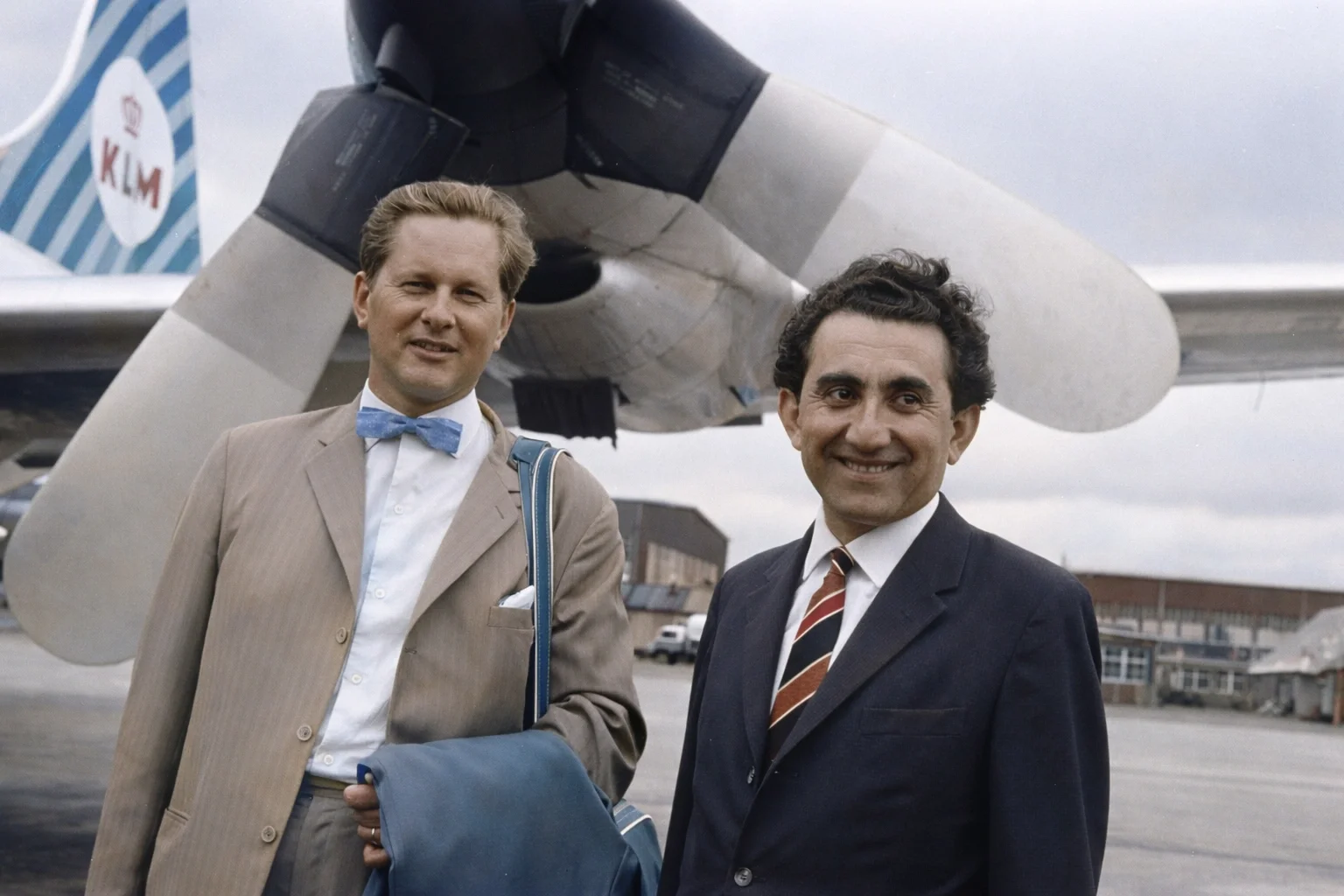
Contributions to Chess Literature and Analysis
In addition to his competitive exploits, Paul Keres was a prolific and insightful chess author and theoretician. He produced several classic books that continue to be revered for their instructional value and analytical depth. One of Keres’s signature works is his autobiographical best-games collection, Grandmaster of Chess, in which he annotated his most important games from the 1930s through the 1950s. His annotations in this collection are famously thorough and candid, shedding light on both the technical and psychological aspects of his battles. Along with fellow grandmaster Alexander Kotov, Keres co-wrote The Art of the Middle Game (first published 1952), a celebrated treatise on middlegame strategy and analysis. He also authored Practical Chess Endings (1974), a comprehensive endgame manual that distilled his vast knowledge of endgame theory for the benefit of aspiring players. All three of these books – his game collection, the middlegame book, and the endgame manual – are still considered among the best in their genres for serious students of the game.
Keres’s influence extended to opening theory literature as well. In the late 1940s and 1950s, he published a series of opening monographs and theoretical surveys, often in German and Russian, reflecting the cosmopolitan reach of his scholarship. Notably, he wrote parts of the seminal Theory of Chess Openings series; Britannica records that he published The Theory of Chess Openings: Open Openings (Parts I–II, 1949–52) and a third volume on the French Defense (1958). He was also an editor/contributor to the first edition of the Encyclopaedia of Chess Openings (ECO) in the early 1970s, helping to codify opening knowledge for future generations. His authoritative writing in multiple languages made him an international ambassador of chess theory. Keres even co-founded a chess magazine (in Riga, Latvia) called Шахматы (Shakhmaty, meaning “Chess”), further evidencing his engagement in chess journalism and education.
Beyond books, Keres regularly wrote analytical articles and tournament reports. His ability to explain complex ideas clearly made his writings accessible to a wide audience of players. For instance, his detailed account of the 1948 World Championship tournament (in which he participated) is often cited for its honest commentary on each game, including his own missteps. In total, the breadth of Keres’s contributions to chess literature – spanning openings, middlegames, endgames, and annotated games – solidified his reputation not just as a great player but also as a great teacher of the game.
Legacy and Reputation
Paul Keres’s legacy in chess history is profound and enduring. He is widely acknowledged as one of the greatest players never to become World Champion, a sentiment echoed by many historians and grandmasters. Indeed, few would dispute that at various points from the late 1930s to early 1960s, Keres was strong enough to hold the world title had circumstances been more favorable. ChessBase, for example, calls him “the strongest player never to have played for the world championship title.” This enduring reputation as the game’s ultimate “could-have-been” champion has a poignant place in chess lore. It is underscored by Keres’s extraordinary record against top competition: over his career he defeated nine undisputed world champions, vanquishing every world champion from Capablanca through Bobby Fischer at least once. (He is one of only three players in history with that distinction.) Remarkably, Keres achieved plus (winning) lifetime scores against greats like Capablanca, Euwe, and Tal, and an even score against the likes of Smyslov and Petrosian. Such statistics affirm that his skill was on par with the very best of his era – a fact peers recognized in giving him the aristocratic moniker “The Crown Prince of Chess.”
In his native Estonia, Keres’s popular legacy transcended chess. He was voted the Estonian Sportsman of the Century in 2000, honoring him above all other athletes. When Keres died of a heart attack on June 5, 1975 (suddenly, during a stopover in Helsinki as he returned from yet another tournament victory in Vancouver), the entire nation mourned. An estimated 100,000 people – about a tenth of Estonia’s population – lined the streets of Tallinn for his state funeral. Such an outpouring of respect reflected not only his chess achievements but also the symbolic role he played for Estonians during turbulent times. Keres was memorialized on postage stamps, and his portrait graced the 5-kroon banknote of Estonia for many years. In 2016, to celebrate what would have been his 100th birthday, Estonia’s central bank issued a special commemorative €2 coin bearing Keres’s image – the first time a chess player has been honored on legal tender. Statues and monuments of Keres stand in Tallinn, Narva, and Pärnu, ensuring his presence is still felt in the cities he touched. Moreover, both Estonia and Canada host annual Paul Keres memorial tournaments, a unique double homage that spans continents (a reflection of the deep impression he left in Vancouver, where he won his final tournament).
Modern grandmasters and chess writers continue to celebrate Keres’s games and character. His fighting yet sportsmanlike style is held up as a model for aspiring players: “Play over and study his games, and your own attacking skills will blossom,” advises Leonard Barden, a veteran chess columnist who played Keres in 1957. Garry Kasparov included Keres in My Great Predecessors despite Keres never being world champion, a testament to his importance among 20th-century chess giants. In sum, Paul Keres’s story is one of brilliance, perseverance, and dignity. He navigated the treacherous politics of his era and came within a heartbeat of the sport’s ultimate prize on multiple occasions. Although fate denied him the world championship, Keres’s name endures as a byword for chess excellence and integrity. His peers admired him, history regards him kindly, and to this day he is spoken of with reverence as the “Eternal Second” who in many ways was second to none.
Sources:
Paul Keres biography and career overview
Leonard Barden, The Guardian: “Pride of Estonia: Paul Keres” (historical commentary on Keres’s career and WWII experiences)
Encyclopaedia Britannica: Profile of Paul Keres (summary of achievements and writings)
Edward Winter’s Chess Notes & historical records (chesshistory.com)
ChessBase article “Remembering Paul Keres” (career retrospective)
Wikipedia “Paul Keres” (for detailed tournament results, game references, and posthumous honors)
Grandmaster Samuel Reshevsky’s observations on Keres (as quoted in Chess Notes).
