Vladimir Bagirov: The Fortress of Baku and Architect Behind the Champions
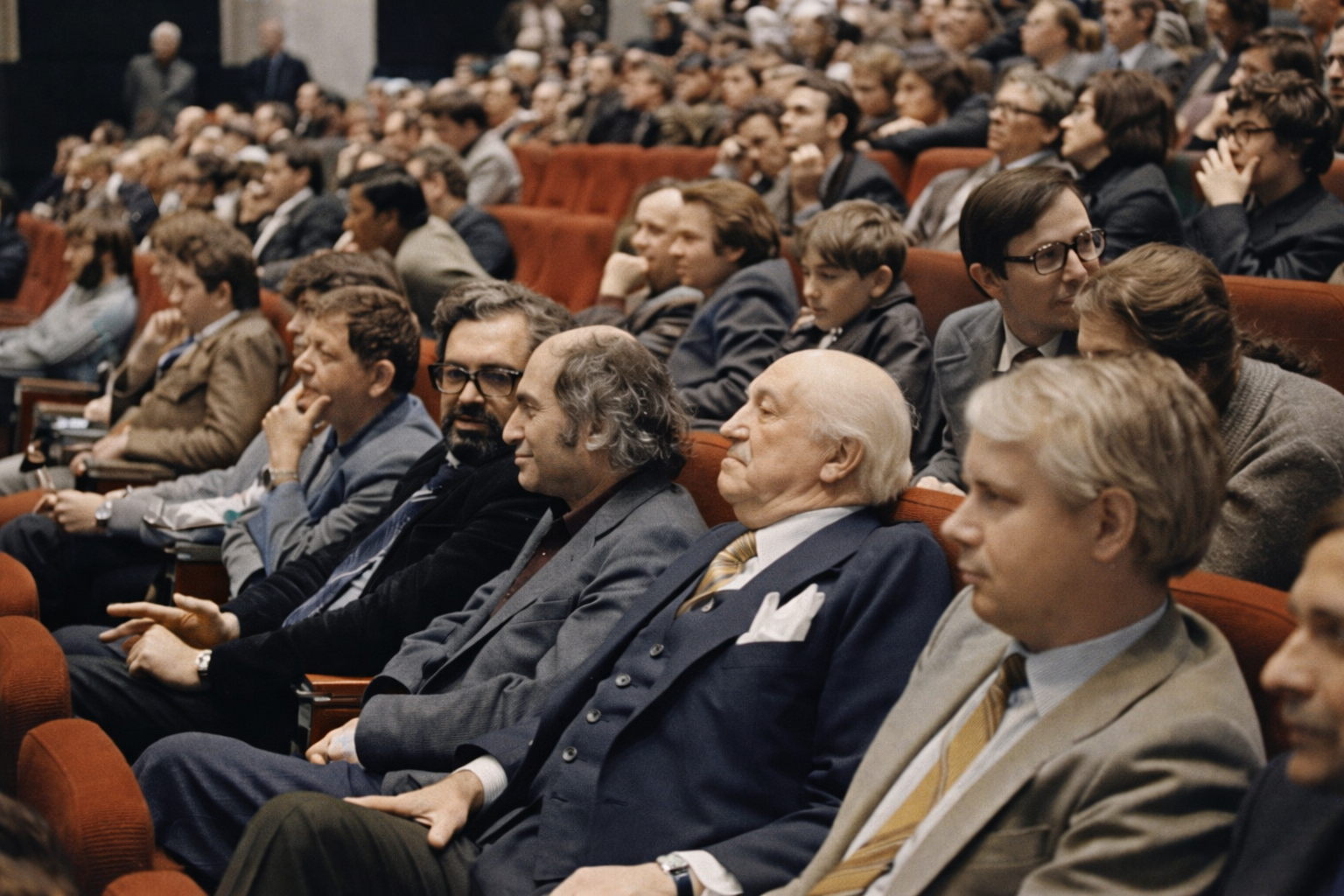
Vladimir Bagirov with Mikhail Tal at the Moscow Interzonal tournament in September, 1982. Bagirov was Tal’s second.
Vladimir Bagirov belongs to a special class of chess figures who are easier to underestimate than to replace. He was not the public face of an era in the way Tal or Kasparov were, but he was one of the era’s indispensable professionals: a Baku-born grandmaster, later a Latvian international representative, a ferociously well-schooled tournament player, a trainer of elite stars, a formidable opening analyst, and a writer. He was born on 16 August 1936 and died on 21 July 2000 after collapsing during the Heart of Finland tournament in Jyväskylä, Finland.
To understand why Bagirov matters, it helps to stop asking only the champion’s question, which is who won the biggest crowns, and ask the structural question, which is who actually sustained high-level chess culture. By that measure, Bagirov was extraordinarily important. He was strong enough to finish fourth in the 1960 USSR Championship; he later served as an analyst or second to major players such as Lev Polugaevsky and Mikhail Tal. Early sources place him in Garry Kasparov’s Baku formative environment, and opening historians still connect his name with the Alekhine Defense and the King’s Indian line known as the “Bagirov system.”
Life, Family, and Baku
Bagirov was born in Baku, of Armenian and Ukrainian parentage, in a city that was already one of the great nurseries of Soviet chess. Biographical accounts say that his father, an oil specialist, was arrested and shot in 1937 during the Stalinist terror, when Bagirov was still an infant. He later studied engineering related to the oil industry and learned chess at about 10 years old at the Baku Palace of Pioneers under Suren Abramian. Bagirov emerged from the Soviet machinery of youth training, but also from a private family catastrophe that belonged to the century’s larger violence.
He soon became a dominant local force. Soviet chess biographical sources credit him with 13 Azerbaijan championship titles, an extraordinary mark of endurance, even before one gets to international results. What that record really signaled was staying power. He was a fixture in Baku chess for many years, and his name was already well known within the Soviet system before the wider international public fully recognized it.
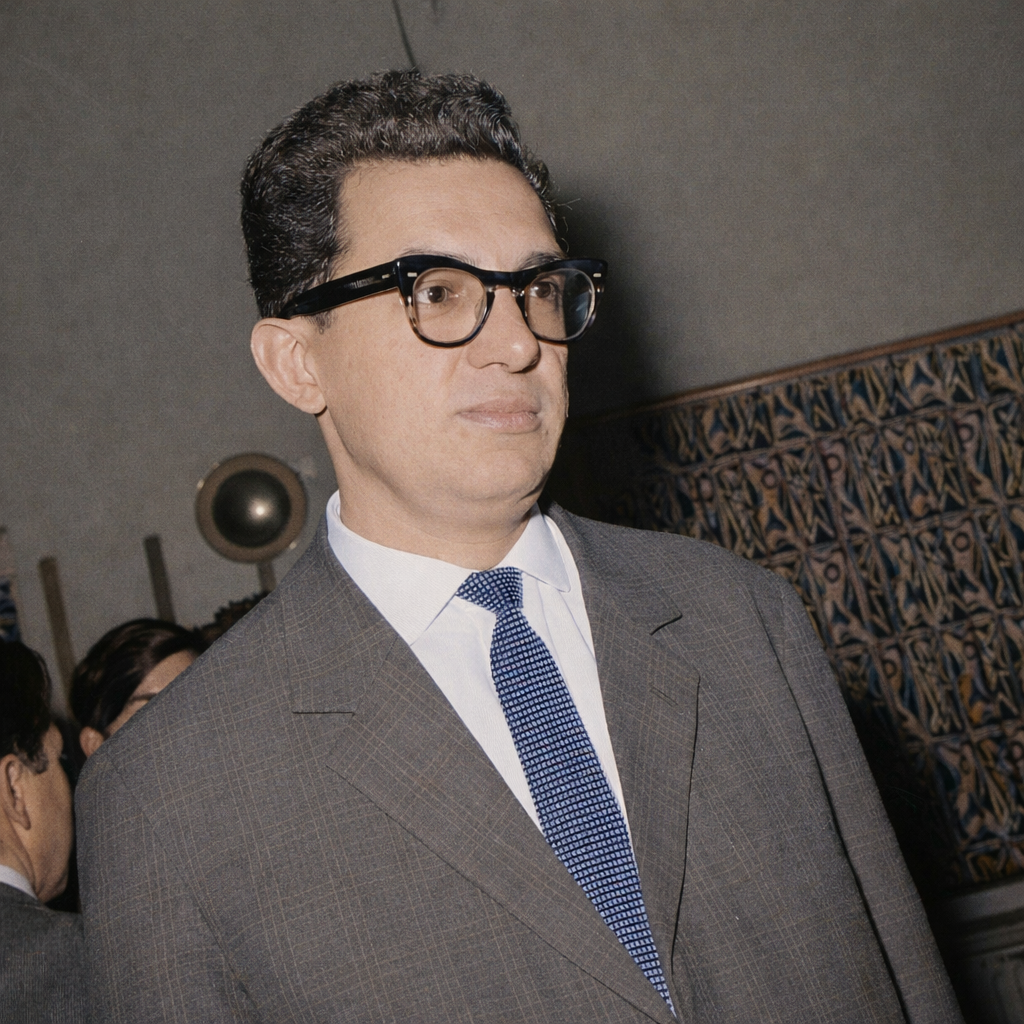
The Fortress of Baku
Vladimir Bagirov
The 1960 USSR Championship
The decisive breakthrough came at the 1960 USSR Championship. Bagirov got in from the reserve list after Paul Keres withdrew, but once seated, he played like a man who had been waiting to break the door for years. He finished fourth, behind Viktor Korchnoi, Tigran Petrosian, and Efim Geller, while placing ahead of Smyslov, Spassky, Bronstein, Taimanov, Averbakh, and Polugaevsky. The Russian Chess Federation notes that he beat Korchnoi, Spassky, and Bronstein in that event, earning his first grandmaster norm. Later the same year, he was fourth again at the Central Chess Club tournament in Moscow, once more ahead of Korchnoi, which makes clear that the USSR Championship result was no freak gust of form.
That single result explains a great deal about Bagirov’s true level. In the Soviet Union, a high finish in the national championship was not merely a domestic success. It was an index of world-class strength because the event regularly contained an absurd density of elite players. Bagirov’s fourth place in 1960 was, in effect, a declaration that he belonged in the upper reaches of Soviet chess, which also meant the upper reaches of world chess.
Why the Grandmaster Title Came So Late
Yet Bagirov was not awarded the grandmaster title until 1978. The second norm arrived only after his strong result in the 1977 USSR Championship, where he shared fifth through seventh with Geller and Tal. The seventeen-year lag between his first and second norms is one of the clearest illustrations of Soviet chess's depth and bureaucracy: a player could already be elite by performance standards and still wait years for the international opportunities needed to formalize that status. Bagirov remained a regular Soviet Championship finalist throughout this period, with sources counting either eight or nine finals, and he also won tournaments in Jakarta, Baku, Batumi, Moscow, and Tbilisi.
For historians, Bagirov is therefore useful as more than a single biography. He is a case study in Soviet overproduction of excellence. The system trained him superbly, gave him terrifyingly strong domestic opposition, and trusted him in major team events. The same system also rationed foreign exposure so tightly that a player of obvious grandmaster strength could spend much of his prime under-titled. Bagirov’s life is a small argument against measuring Soviet chess only by world champions or title counts.
Proof of Strength
His team record further confirms the level. For the USSR, he helped win gold at the 1961 European Team Championship in Oberhausen, scoring an unbeaten 5.5/8 as second reserve. He then contributed to the Soviet gold at the World Student Team Championships in 1961 and 1962, scoring 9/11 and 7.5/10, respectively. At club level he also won multiple European Club Cups. These were not decorative assignments. Soviet selectors used such events on players they trusted to deliver technically reliable points. Bagirov kept being chosen.
“The Fortress from Baku”
What kind of player was he? Contemporary descriptions are strikingly consistent. The Russian Chess Federation stressed his defensive skill, precise calculation, and subtle endgame technique, and dubbed him “The Fortress from Baku.” Genna Sosonko, writing from memory, depicted him as a deeply classical player: Rubinstein in his apprenticeship, Makogonov in his strategic education, Smyslov as the figure he admired. Sosonko’s portrait of Bagirov as an “academic, positional” master with excellent opening knowledge and stubborn defense fits the results very well. Even when he employed provocative openings, the inner logic of his chess remained classical: restraint, structure, and technique before display.
That combination is part of what makes him interesting. Bagirov is often remembered for theory, especially for openings that can look offbeat or psychologically charged. But his real chess personality was not built on theatrical risk. It was built on understanding. He was the sort of player who could make an odd opening feel sane because he did not treat it as a stunt. He treated it as a position with laws, plans, and endgames.
Coach and Second
Bagirov’s importance expands dramatically once one looks beyond his own crosstables. The Russian Chess Federation states that he worked with Lev Polugaevsky for nine years. After moving to Riga around 1979 to 1980, he became closely associated with Tal and served as Tal’s second at the 1982 Moscow Interzonal; he also collaborated on published annotations for Tal’s 1983 match against Ulf Andersson. Early reports on Garry Kasparov identify the eleven-year-old future world champion as being coached by Bagirov in Baku, and Kasparov’s own recollection of the Palace of Pioneers milieu places Bagirov in a leadership role there. Alexei Shirov later named Bagirov among the coaches who taught him, and obituary notices also credit him with helping Alexander Shabalov.
This part of Bagirov’s legacy is easy to underrate because coaching produces indirect fame. Yet it may be his deepest contribution. Elite players do not keep weak analysts around out of sentiment. They rely on people who can test ideas, find resources, stabilize repertoires, and say when a fashionable line is strategically rotten. Bagirov had precisely that reputation: broad opening knowledge, steadiness, and a seriousness about endings and structure that made him valuable to players more famous than himself. He was one of those hidden load-bearing beams in top-level chess culture.
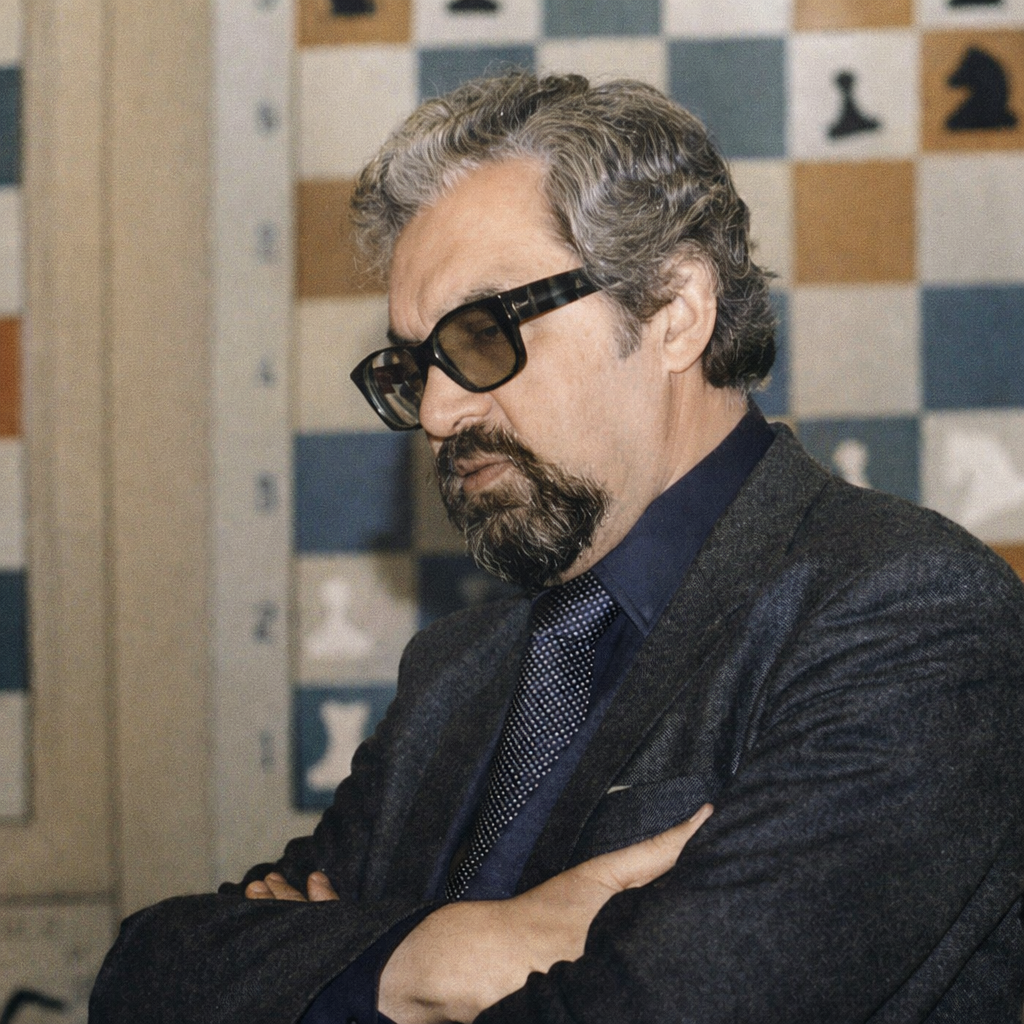
Alekhine and the King’s Indian
As a theoretician, Bagirov’s signature subject was the Alekhine Defense. Soviet chess sources call him its foremost specialist, and the Russian Chess Federation writes that the opening owed its “second resurrection” to him. Later Western opening authors reached similar conclusions: John Watson listed Bagirov’s writings among the key older sources on the defense, while John Cox described him as the leading Alekhine player of his day. The important point is not just that he played the opening. He helped convert it from an eccentric provocation into a system backed by serious strategic literature.
His theoretical footprint was wider than Alekhine's. In later opening literature, the King’s Indian line with an early h3 by White came to be called the “Bagirov system,” and Michał Krasenkow explicitly wrote that Bagirov had laid the strategic foundations of the concept through his games. Bagirov also invested substantial effort in the English Opening, producing monographs in the 1990s on both the Classical and Indian setups, as well as the Symmetrical variation. Near the end of his life, he added a CD-ROM treatment of the Queen’s Gambit Declined Exchange Variation. These are the publications of a working analyst who preferred dense practical knowledge to literary self-display.
He was also a public intellectual of chess in the old Soviet sense. Biographical sources describe him as a regular contributor to Shakhmaty v SSSR and later to the Riga magazine Shakhmaty. In 1991, with Evgeny Kirilovs, he published White Fischer, a large compendium of Bobby Fischer’s games with White arranged by opening variation; contemporary descriptions note that the opening surveys were Bagirov’s own contribution, and the book carried an introduction by Tal. That project tells you a great deal about Bagirov’s mind. He liked chess knowledge organized, categorized, and made teachable.
Riga and Career Reinvention
Bagirov’s move from Baku to Riga in the late 1970s made him a bridge between two major Soviet chess milieus. According to memoir-based accounts, Tal encouraged the move and helped him settle there. After 1991, Bagirov represented Latvia internationally, playing at the 1992 Olympiad in Manila, the 1993 World Team Championship in Lucerne, and the 1996 Olympiad in Yerevan, scoring 4/8, 2.5/5, and 4.5/8, respectively. His career, therefore, sits fruitfully inside several national histories at once: Azerbaijani by origin and republican titles, Latvian by later representation, Armenian by family background and memorialization, and Soviet in the deeper institutional sense.
The last great trophy of his own playing career was the 1998 World Senior Championship in Grieskirchen, which he won on a tiebreak after finishing level with Wolfgang Uhlmann on 8.5/11. This was not simply a nostalgic laurel. It confirmed that Bagirov’s style aged well. Players whose chess rests on memory alone often fade; players whose chess rests on judgment, structure, and technique often keep their claws sharp deep into later life. Bagirov remained dangerous because his understanding had not been built on fashion.
Death and Legacy
His end came with cruel abruptness. In May 2000, he underwent heart surgery, but continued competing. At the Heart of Finland Open in Jyväskylä, he began with 3/3, then suffered a heart attack during round four, never regained consciousness, and died on 21 July 2000. The scene is grim, but it also completes the man's outline. Bagirov died not in retirement from chess, but inside chess, still at work.
Posthumously, his reputation has survived most vividly among serious players, historians, and the communities that knew him best. A Vladimir Bagirov Memorial was held in Riga in 2011 with support from the Riga Chess Federation, Alexei Shirov, and the local Armenian society. That constellation is apt. Bagirov was remembered not merely as a result sheet, but as a teacher, colleague, and bearer of a specific chess culture.
In the end, Bagirov’s life argues for a broader way of writing chess history. The game is not built only by world champions and headline winners. It is also built by players who are strong enough to place fourth in a ferociously strong Soviet championship, wise enough to guide future champions, stubborn enough to rehabilitate suspect openings, and disciplined enough to turn analysis into books and teaching. Vladimir Bagirov was one of those figures. His fame was narrower than his importance, and that is exactly why he remains worth studying.
Sources
Russian Chess Federation – Persons of the Day: Vladimir Bagirov
D. Griffin, Vladimir Bagirov Biography, 2024
OlimpBase – European Team Championship 1961, World Student Team Championships 1961–1962
ChessBase articles on opening surveys and theoretical contributions
Chessdom – Vladimir Bagirov Memorial, Riga 2011
FIDE records – World Senior Championship 1998
